JHY PCB Blog Hub
Your Source for Expert PCB Design, Manufacturing, and Assembly Insights – Stay Informed with 2025 Trends!
2026 Best Substation Transformer Types for Global Buyers
Choosing the right substation transformer in 2026 requires more than comparing price, capacity, and delivery time. Global buyers must match transformer design with grid voltage, climate, fire-safety requirements, maintenance skills, and project location. A coastal substation faces salt exposure, while a desert installation may experience extreme heat, dust, and limited water access. These conditions can change the best technical choice.
This guide examines oil-immersed, dry-type, cast-resin, and other Substation Transformers used across modern transmission and distribution networks. It considers efficiency, cooling methods, insulation systems, noise levels, footprint, service life, and total ownership cost. Practical selection should also reference applicable IEC, IEEE, and local utility requirements. Certification documents matter. So does the manufacturer’s field record.
No ranking is universal. That assumption fails. A compact cast-resin unit may suit an urban building, but an oil-immersed transformer can remain more practical for a high-capacity outdoor substation. Buyers should review factory test reports, temperature-rise data, partial-discharge results, warranty terms, spare-parts support, and commissioning procedures. These details often reveal more than a polished product brochure. Some projects still underestimate future load growth and replacement access. That mistake can become expensive. By comparing technical evidence with real operating conditions, procurement teams can select a safer, more reliable, and financially defensible transformer solution for 2026 and beyond.
What a Substation Transformer Is and Why Its Type Matters
A substation transformer changes voltage between transmission and distribution networks. It also controls losses, fault performance, insulation needs, and maintenance exposure. In practice, the type determines how the transformer behaves beside a control room, railway, factory, or offshore wind site.
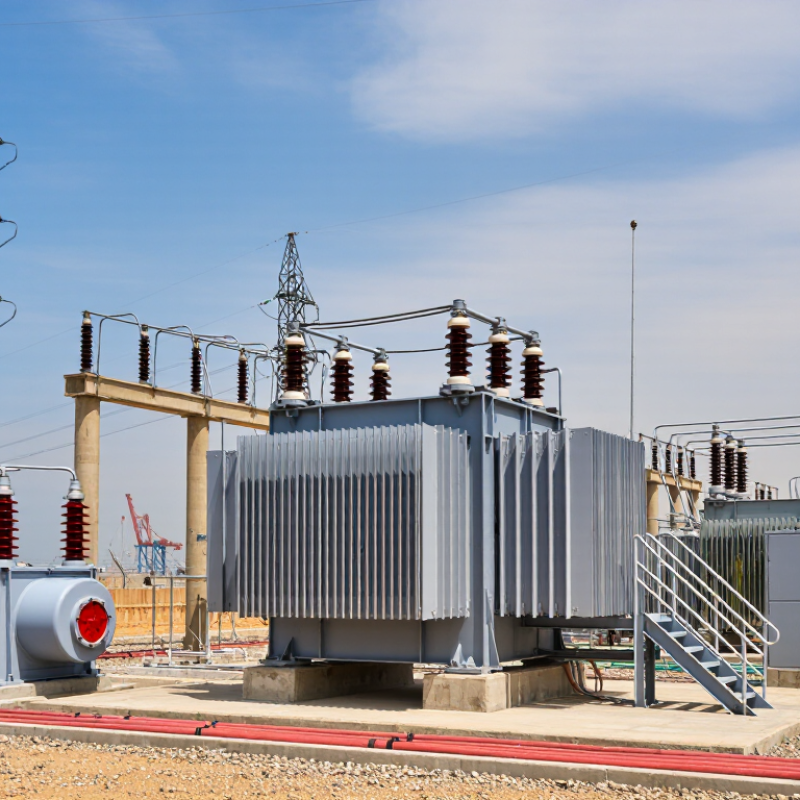
Oil-immersed power transformers suit high-voltage substations because oil provides strong insulation and removes heat efficiently. Dry-type transformers reduce fire and leakage concerns, making them useful indoors or near dense urban loads.
Autotransformers can save material and reduce losses when voltage ratios remain close. However, they provide less electrical separation. IEC 60076 requirements help buyers compare testing, insulation, temperature rise, and short-circuit performance.
The IEA’s Electricity 2024 report says annual grid investment must rise above 600 billion dollars by 2030 to support modernisation. That pressure makes reliable transformer selection more important. Still, no type is universally best.
Tips:
Check altitude, ambient temperature, humidity, salt exposure, load cycles, and available maintenance staff. Ask for guaranteed losses at realistic loading, not only the nameplate rating. Review spare-part access and factory test records.
The U.S. Department of Energy’s 2024 transformer supply-chain assessment highlights long procurement periods for large transformers. Ordering late can delay an entire substation. A low purchase price may become expensive after installation.
I would also question optimistic service-life estimates; field conditions rarely match laboratory assumptions. A careful buyer should compare lifecycle cost, safety, footprint, noise, and recovery time after faults.
How Substation Transformer Types Are Classified
2026 Best Substation Transformer Types for Global Buyers
How Substation Transformer Types Are Classified
Substation transformers are classified by more than voltage rating. IEC 60076 groups key requirements around power transformers, insulation, testing, and thermal performance. Buyers commonly compare phase design, winding arrangement, cooling method, insulation medium, installation location, and tap-changing function.
Three-phase units dominate utility substations because they reduce footprint and simplify grid balancing. Oil-immersed transformers usually support higher ratings and outdoor operation. Dry-type transformers suit indoor substations, tunnels, and areas requiring lower fire risk. Cooling codes also matter. ONAN cooling uses natural oil and air, while ONAF adds forced air for higher loading. A useful detail is temperature rise: poor ventilation can reduce practical capacity, even when the nameplate looks sufficient.
IEA Electricity 2024 forecasts global electricity demand to grow by an average 3.4% annually through 2026. This growth increases pressure on transmission capacity and replacement planning. However, selecting the largest transformer is not automatically wise. Load cycles, altitude, humidity, short-circuit levels, and maintenance access can change the best choice. I have seen specifications fail when local climate data was treated as an afterthought.
Tips: Build a classification matrix before requesting quotations. Record voltage ratio, MVA, cooling code, insulation level, tap range, ambient temperature, and noise limit. Ask for routine and type-test evidence under IEC 60076. Leave engineering margin, but challenge excessive oversizing; it can increase losses, transport complexity, and idle cost.
2026 Best Substation Transformer Types for Global Buyers
How substation transformer types are classified by function and typical rated power.
The chart presents representative engineering rating bands commonly used for planning and equipment selection. Distribution transformers generally serve local medium-voltage networks, power substation transformers connect transmission and distribution systems, transmission transformers handle high-voltage grid transfer, and autotransformers are commonly selected for high-capacity interconnection between voltage levels.
Values are indicative ranges rather than universal limits. Actual ratings depend on system voltage, load profile, short-circuit level, cooling method, insulation coordination, grid codes, and IEC 60076 or IEEE C57 requirements.
Key Features of Oil-Immersed and Dry-Type Transformers
2026 Best Substation Transformer Types for Global Buyers
Key Features of Oil-Immersed and Dry-Type Transformers
Oil-immersed transformers remain a strong choice for outdoor substations and high-capacity networks. Mineral or biodegradable insulating fluid cools the windings and improves heat transfer. A sealed tank can reduce moisture entry and routine fluid exposure. Radiators, conservators, and pressure-relief devices support stable operation under changing loads. Buyers should check fluid fire points, local environmental rules, and maintenance access before ordering.
Dry-type transformers use solid insulation and air-based cooling. They fit indoor substations, commercial buildings, tunnels, and areas with stricter fire-control requirements. Cast-resin windings resist moisture, dust, and chemical contamination when correctly specified. Ventilation is critical. A cramped room can raise winding temperature, even when the transformer appears lightly loaded. Noise levels and enclosure ratings also deserve attention.
Selection should follow measured site conditions, not a familiar specification. Compare kVA rating, voltage ratio, impedance, vector group, losses, altitude, and short-circuit duty. Testing should cover insulation resistance, ratio accuracy, temperature rise, and partial discharge where applicable. Standards such as IEC or IEEE provide useful frameworks, but local grid rules still control acceptance. No option is perfect. Oil systems may offer better cooling, while dry types can simplify indoor risk management. Yet poor ventilation, weak protection settings, or underestimated harmonics can damage either design.
| Evaluation Dimension | Oil-Immersed Transformers | Dry-Type Transformers | Buyer Selection Guidance |
|---|---|---|---|
| Primary Insulation Medium | Mineral oil or less-flammable ester liquid provides insulation and transfers heat to the tank and cooling system. | Solid insulation, commonly cast resin or varnished insulation, with air as the external cooling medium. | Choose the insulation system according to fire risk, environmental requirements, maintenance capability, and installation location. |
| Typical Application | Outdoor substations, utility transmission and distribution networks, industrial substations, and high-capacity power systems. | Indoor substations, commercial buildings, hospitals, data centers, tunnels, renewable-energy facilities, and fire-sensitive sites. | Oil-immersed units are generally preferred for higher power and outdoor service; dry-type units are often preferred where indoor fire safety is critical. |
| Common Capacity Range | From small distribution ratings to several hundred MVA in large power transformers. The practical range depends on voltage level, cooling method, and grid requirements. | Commonly from several hundred kVA to approximately 20–30 MVA for substation applications; larger ratings are possible but less common. | Confirm the required continuous load, overload profile, short-circuit level, future expansion, and local utility specifications before fixing the rating. |
| Typical Voltage Capability | Suitable for medium-voltage through high-voltage and extra-high-voltage applications, subject to design and insulation coordination. | Most commonly used on low-voltage and medium-voltage systems, frequently up to 36 kV class; higher-voltage designs require specific verification. | For transmission or high-voltage substations, oil-immersed construction is normally the more established solution. |
| Cooling Methods | Common designations include ONAN and ONAF; larger units may use additional forced-oil or directed-oil cooling systems. | Common designations include AN and AF, meaning air natural and air forced cooling. | Compare the rated capacity under natural cooling first. Forced cooling may increase capacity but adds fans, controls, noise, and maintenance points. |
| Typical Temperature-Rise Classes | Many designs use approximately 55 K or 65 K average winding temperature rise, depending on the applicable standard and specification. | Common dry-type designs use temperature-rise classes such as 80 K, 100 K, or 120 K, depending on insulation system and manufacturer design. | Lower temperature rise can improve service life and overload margin but may increase size and cost. Use the project specification rather than comparing values without context. |
| Fire and Environmental Risk | Mineral oil is combustible and requires appropriate fire protection, oil containment, drainage, and separation. Ester liquids can provide a higher fire point than mineral oil. | No liquid insulation is present, so liquid-spill risk is eliminated. The resin and insulation system still require compliance with the required fire and smoke classification. | For buildings and restricted indoor spaces, dry-type or less-flammable-liquid designs may simplify risk assessment, subject to local fire codes. |
| Efficiency and No-Load Loss | Usually offers very high efficiency at medium and high ratings. No-load losses are influenced by core material, flux density, and operating voltage. | Can also achieve high efficiency, but enclosure ventilation, core design, and operating temperature affect performance. | Request guaranteed no-load loss, load loss, impedance, and total ownership-cost calculations at the specified tap and frequency. |
| Short-Circuit Withstand | Well-established for high fault levels when properly designed and braced; the required withstand duration and current must be specified. | Can provide strong short-circuit performance, but mechanical design, resin integrity, and support structure must be verified for the project fault level. | Specify the short-circuit current in kA, duration, system X/R ratio where applicable, and the applicable test or calculation requirements. |
| Noise Characteristics | Core magnetostriction, cooling fans, pumps, and tank vibration contribute to sound level. Forced cooling generally increases noise. | Core magnetostriction and cooling fans contribute to sound level. Natural-air designs may avoid fan noise during normal operation. | For urban, residential, and indoor projects, include a guaranteed sound-pressure or sound-power limit in the purchase specification. |
| Maintenance Requirements | May require liquid sampling, dissolved-gas analysis, leak inspection, bushing checks, pressure-relief-device checks, and cooling-system maintenance. | Generally avoids liquid testing and leak maintenance. Periodic inspection, cleaning, connection checks, temperature monitoring, and fan maintenance may be required. | Dry-type units can reduce routine liquid-related maintenance, while oil-immersed units may offer more established field-service practices for large substations. |
| Installation Space | Requires consideration of oil containment, fire separation, ventilation, access for lifting, and clearance around radiators and bushings. | Often suitable for compact indoor substations, but sufficient ventilation, clearance, enclosure access, and heat dissipation must be provided. | Compare the complete installation footprint, including containment, fire barriers, ventilation equipment, cable terminations, and maintenance access. |
| Altitude and Climate Adaptation | High altitude, low temperature, humidity, salt pollution, and solar heating may require derating or special design features. | High altitude reduces air density and cooling capability; humidity, condensation, dust, and pollution may require heaters, filters, or protective enclosures. | State the site altitude, minimum and maximum temperature, humidity, pollution level, seismic conditions, and solar exposure in the inquiry documents. |
| Protection and Monitoring | Common accessories include oil and winding temperature indicators, pressure relief devices, liquid-level indicators, Buchholz relays for applicable conservator designs, and online monitoring options. | Common accessories include winding temperature sensors, thermistors or RTDs, fan controllers, alarm contacts, and partial-discharge monitoring where specified. | Select protection based on transformer design, not only on transformer category. The final scheme must coordinate with the substation protection system. |
| Relevant International Standards | IEC 60076 series and IEEE C57 series are widely used. The applicable standard depends on the purchaser, country, voltage level, and utility requirements. | IEC 60076-11 is specifically applicable to dry-type power transformers, with other parts of IEC 60076 and regional standards also relevant. | Identify the governing standard edition, routine tests, type tests, special tests, tolerances, documentation, and inspection requirements in the contract. |
| Lifecycle Cost Factors | Purchase price, liquid management, fire protection, losses, cooling auxiliary power, inspections, and possible oil treatment influence total cost of ownership. | Purchase price, ventilation or fan power, room construction, cleaning, thermal management, losses, and replacement access influence total cost of ownership. | Evaluate capital cost together with 20–30-year energy losses, maintenance, downtime risk, civil works, and safety-system costs. |
| Best-Fit Summary | Best suited to high-capacity outdoor substations, high-voltage networks, utility applications, and projects prioritizing high power density. | Best suited to indoor or fire-sensitive installations, buildings with limited spill-control infrastructure, and medium-voltage applications near occupied areas. | Neither type is universally superior. The best choice depends on capacity, voltage, site conditions, fire strategy, noise limits, reliability targets, and lifecycle economics. |
How Voltage, Capacity, and Grid Conditions Guide Selection
2026 Best Substation Transformer Types for Global Buyers
Choosing a substation transformer starts with the voltage profile, not a catalog image. Transmission networks often require high-voltage transformers with strong insulation coordination. Distribution substations may need medium-voltage units with simpler operating requirements. The selected ratio must match normal voltage, seasonal variation, and future interconnection plans. A small mismatch can create heat, losses, or unstable downstream voltage.
Capacity should reflect measured demand, motor starting, renewable output, and planned load growth. Engineers commonly compare peak load with a practical reserve margin. Oversizing looks safe, but it can increase cost, losses, and low-load inefficiency. Undersizing is worse. It may force overheating during a hot afternoon.
Cooling method matters here. Natural cooling can suit moderate loads, while forced-air or oil-assisted systems may support heavier duty cycles.
Grid conditions change the decision. Frequent faults require stronger short-circuit withstand capability and careful protection coordination. Coastal sites need better corrosion control. Dusty or high-altitude locations can reduce cooling performance and insulation strength.
On-site surveys remain essential. Soil resistance, ambient temperature, transport access, and maintenance skills should enter the specification. A spreadsheet cannot reveal every problem. Engineers sometimes rely too heavily on standard assumptions. That deserves review.
Buyers should request verified test data, clear loss guarantees, noise limits, and documented compliance with applicable IEC or IEEE requirements. Reliable selection comes from matching technical evidence with actual grid behavior.
Global Standards, Safety Factors, and Buying Considerations
2026 Best Substation Transformer Types for Global Buyers
Global buyers should match transformer design with local standards, climate, and grid behavior. IEC 60076 remains a core reference for power transformer testing, insulation, temperature rise, and short-circuit performance. IEEE C57.12.00 adds widely used requirements for liquid-immersed units in North American projects. Neither standard replaces a site study. That matters.
Oil-immersed transformers suit high-capacity substations and long transmission corridors. Dry-type transformers reduce liquid-fire concerns in hospitals, tunnels, and dense urban sites.
Autotransformers can lower material use between closely matched voltage levels, but their insulation separation is limited.
Buyers should verify fault duty, altitude, seismic exposure, ambient temperature, noise, and cooling redundancy. A 10% design margin is not universally safe. It may be excessive for one network and insufficient for another.
The IEA Electricity 2024 report expects global electricity demand to grow by about 3.2% annually through 2026. This growth increases pressure on aging substations and spare-parts planning.
CIGRE technical guidance emphasizes condition monitoring, dissolved-gas analysis, bushing checks, and transformer loading history.
Ask for factory test records, loss guarantees, thermal data, and service support before comparing prices. Low purchase cost can hide higher lifetime losses. Sometimes, it does. A perfect specification rarely exists; buyers should document every compromise.