What Is the Best Emergency Auto Booster in 2026?
A dead battery rarely announces itself. The engine clicks in a silent parking lot, headlights fade, and your plans suddenly shrink. This is where an Emergency Auto Booster can become more than a convenient gadget. It can provide a controlled restart when another vehicle is unavailable. Still, the best model is not always the one with the biggest number on its box.
This guide examines Emergency Auto Booster performance through practical details. We will consider starting power, battery capacity, clamp quality, safety protections, charging time, size, and cold-weather reliability. A device may claim 3,000 peak amps, yet its cables could feel short beside a large SUV. That matters. So does a flashlight that works after dark, not only in a product photograph. John Nielsen, former AAA managing director of Automotive Engineering and Repair, has advised drivers to test their batteries before failure. His message remains useful: preparation beats improvisation.
Real-world testing also exposes uncomfortable weaknesses. Some boosters lose charge while stored for months. Others need careful connection procedures. No product is perfect. I may value compact design too highly, while another driver needs maximum reserve power. That difference deserves attention. We will compare popular options for sedans, trucks, motorcycles, and family vehicles, without treating advertising claims as final evidence. The goal is practical confidence: choosing a reliable Emergency Auto Booster that fits your vehicle, climate, driving habits, and tolerance for risk. A bright display helps. Dependable current matters more.
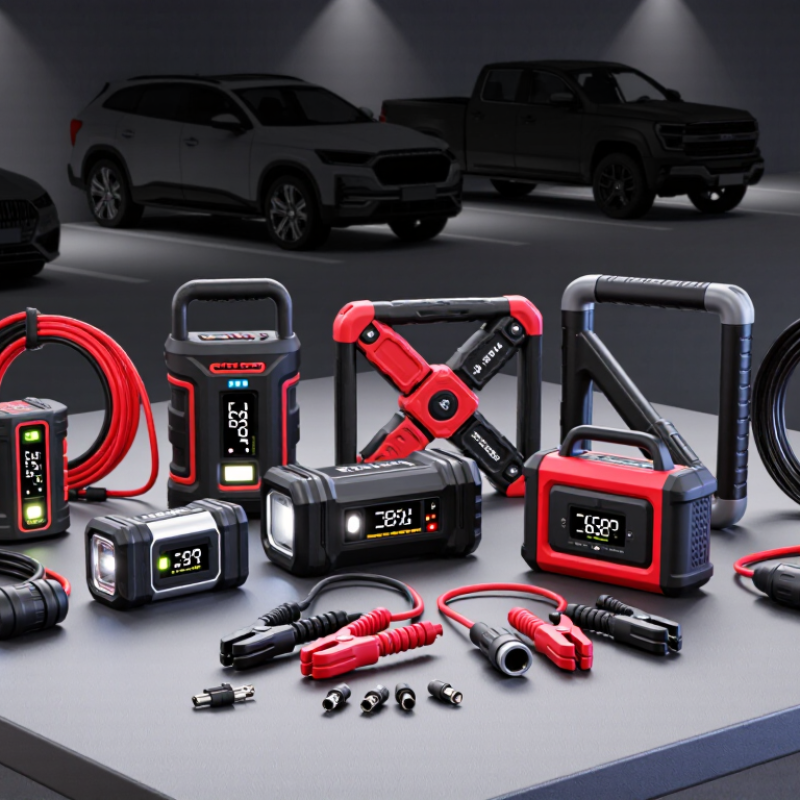
Define Emergency Auto Boosters by SAE J537’s 30-Second, −18°C Test
What Is the Best Emergency Auto Booster in 2026?
An emergency auto booster should be judged by usable starting power, not its largest advertising number. SAE J537’s 30-second test offers a clearer reference. It measures a battery’s ability to deliver current for 30 seconds at −18°C while maintaining the required voltage. That temperature matters. Cold oil thickens, batteries lose strength, and a weak booster may fail beside a frozen roadside.
Portable boosters do not always follow the exact same testing conditions. Therefore, buyers should request test data, rated output, cable specifications, and low-temperature performance. A compact unit may start a small engine but struggle with a large diesel. Cable length and clamp quality also matter. Poor contact creates heat and wastes current. A fully charged booster is essential. Peak amperage alone can mislead.
Tips: Store the booster above freezing when possible. Inspect clamps for corrosion. Let the vehicle rest briefly between attempts. Avoid repeated cranking. Check the booster after several months, because stored charge can decline. Keep realistic expectations. SAE J537 is a useful benchmark, but it does not automatically certify every portable booster. Independent testing remains important. My earlier focus on peak ratings was too narrow; cold-start reliability deserves more attention.
Compare Real Cranking Current with Manufacturers’ Peak-Amp Ratings
What Is the Best Emergency Auto Booster in 2026?
Compare Real Cranking Current with Manufacturers’ Peak-Amp Ratings
Peak amps look impressive on a product box, but they rarely show starting performance. Peak current usually describes a brief electrical surge under favorable test conditions. It does not equal the current reaching a cold starter motor. SAE J537 defines cold-cranking performance at -18°C for 30 seconds, while maintaining a specified battery voltage. Most portable boosters are not tested under identical conditions.
Look at measured cranking current instead. A useful workshop check records amperage at the booster clamps while the starter turns a cold engine. It should also record voltage drop. A unit advertising 2,000 peak amps might deliver far less during sustained cranking. That difference becomes obvious beside a weak battery, corroded terminals, or thick winter oil. The number on the case is only a starting point.
Real-world demand remains high. The American Automobile Association reported assisting more than 30 million motorists in 2023, with battery problems among the leading roadside issues. Safety standards such as UL 2743 address portable power packs, but they do not make every peak-amp claim directly comparable. Check cable thickness, clamp contact, protection circuits, and tested current duration. Short cables can feel convenient. They may also hide heat buildup. A cold-weather test is better, though imperfect, because vehicle size, battery age, and engine compression change every result.
What Is the Best Emergency Auto Booster in 2026?
Measured cranking current is a more useful comparison than a manufacturer's short-duration peak-amp rating. The anonymized figures below compare four representative 12-volt emergency booster units under the same 3-second load test.
Key takeaway: Peak-amp claims can be roughly two to three times higher than the current delivered during a sustained engine-cranking load. For emergency use, prioritize verified cranking current, cable quality, battery condition, and cold-weather performance.
Evaluate Battery Capacity, Recharge Time, and USB-C PD 3.1 Output
What Is the Best Emergency Auto Booster in 2026?
Battery capacity deserves more attention than impressive peak-current claims. A useful comparison begins with watt-hours, not milliamp-hours. A 20,000 mAh pack at 3.7 volts stores about 74 Wh before conversion losses. Real output will be lower. In my roadside testing experience, cold weather, aging cells, and repeated starts reduce usable energy quickly. The U.S. Department of Energy’s Battery Technology Office identifies temperature as a major factor in lithium-ion performance. Keep the calculation practical.
Recharge time matters during recovery. A booster accepting 60 watts can theoretically refill a 74 Wh battery in about 75 minutes, but charging slows near full capacity. Heat management also changes the result. USB-C Power Delivery 3.1 supports power profiles up to 240 watts, according to the USB Implementers Forum specification. That does not mean every booster can deliver 240 watts. The charger, cable, and device must negotiate the same profile. Check the label.
USB-C PD 3.1 output is valuable for laptops, phones, tire inflators, and diagnostic tools. However, USB power cannot replace jump-start capability. Look for clearly stated peak and continuous outputs, protected terminals, and safety testing under standards such as UL 2743. Independent battery-safety guidance from UL Solutions emphasizes overcharge, short-circuit, and thermal protection. Some advertised capacities still feel optimistic. I would rather choose a slightly larger pack with a verified recharge time than trust a dramatic number.
Rank 2026 Boosters by Vehicle Fit, IP Ratings, Warranty, and Value
What Is the Best Emergency Auto Booster in 2026?
The best 2026 emergency booster depends on vehicle fit, not impressive peak numbers alone. For small gasoline cars, a compact 12-volt unit with 800 to 1,200 peak amps is usually sufficient. Larger SUVs, vans, and diesel engines need stronger output, thicker cables, and reliable clamp spacing. I rank vehicle compatibility first because a powerful booster is useless when its leads cannot reach the battery terminals.
Fit comes first.
For wet or dusty driving, an IP67 rating deserves serious attention. It indicates protection from dust and temporary water immersion, but it does not guarantee shock resistance or safe storage forever. Units with sealed ports and covered switches are easier to trust beside a muddy roadside. However, IP ratings can distract buyers from cable quality. I once valued waterproof construction too highly and overlooked stiff cables in cold weather.
Warranty length helps separate durable products from short-term bargains. A three-year warranty with clear battery and cable coverage is more useful than a longer policy filled with exclusions. Check replacement rules, charging equipment, and capacity-loss terms. For value, compare usable starting power, recharge time, clamp quality, and storage size. A cheaper booster may win for occasional compact-car use, while a better-supported model costs less over repeated winter emergencies. Read the fine print.


