


10 Best Precision CNC Parts Suppliers for Global Buyers?
Choosing a supplier for Precision Cnc Parts is not just a search for the lowest quote. A capable partner must hold tolerances, document materials, and explain how parts will be inspected. A drawing may show a 0.02-millimeter tolerance, but the supplier’s measurement method matters too. Ask about machine capacity, inspection equipment, surface finishing, and how production changes are communicated. Details matter.
Manufacturing expert Taiichi Ohno is often credited with the reminder, “Without standards, there can be no improvement.” That principle is useful when comparing suppliers: clear inspection criteria and consistent records make quality easier to verify. Still, standards alone do not guarantee a good working relationship. A supplier should flag an unclear drawing before cutting metal, not after a batch arrives. And so does trust.
This guide reviews ten suppliers serving global buyers, with attention to capabilities, quality systems, communication, and practical sourcing considerations. Some may suit prototypes or complex geometries; others may be better equipped for repeat production. Availability, lead times, and service scope can vary by project and location, so treat any shortlist as a starting point. Request a sample inspection report, confirm what the quoted price includes, and check how revisions are handled. Those steps take time. They can also expose gaps that a polished website cannot show. No ranking can replace a direct technical review, but informed questions make that review more useful.
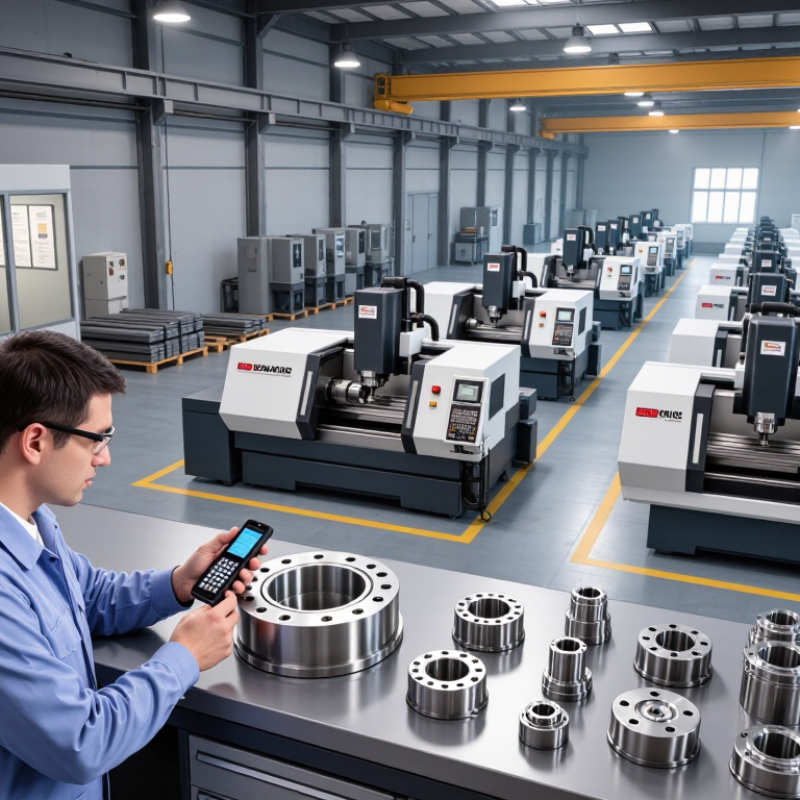
Understanding Precision CNC Parts and Their Global Applications
Precision CNC parts are components cut from metal or engineering plastics to controlled dimensions. Milling, turning, and multi-axis machining can produce a valve body with intersecting passages, a lightweight aerospace bracket, or a medical instrument housing. Their value is not just tight tolerances. Repeatability, surface finish, material traceability, and inspection records matter when parts move between suppliers and assembly sites.
Applications are expanding alongside advanced manufacturing. Grand View Research estimated the global CNC machine market at USD 101.22 billion in 2023 and projected a 6.3% compound annual growth rate from 2024 to 2030. This measures machine sales, not the CNC parts market, but it signals wider investment in automated production. A drawing can look complete and still leave one costly question: which face is the datum? That detail affects setup, inspection, and whether parts from separate production runs fit together. Small ambiguity, real consequences.
Tip: Share the 3D model, material grade, critical dimensions, surface-finish requirements, and expected quantity when requesting a quote. Ask how the supplier measures key features and documents first-article results. Keep tolerances tight where function demands them; specifying extreme precision everywhere can add cost without improving performance. That trade-off deserves a second look.
10 Best Precision CNC Parts Suppliers for Global Buyers? — Understanding Precision CNC Parts and Their Global Applications
The entries below are supplier archetypes, not named companies or a verified ranking. They describe common CNC manufacturing specializations to help buyers compare suppliers. Actual capabilities, tolerances, certifications, pricing, and lead times must be confirmed for each supplier and part.
| Supplier Profile | Typical CNC Processes | Common Materials | Typical Parts and Applications | Tolerance Considerations | What Global Buyers Should Verify |
|---|---|---|---|---|---|
| General-purpose milling supplier | 3-axis milling, drilling, tapping, and basic CNC turning | Aluminum, carbon steel, stainless steel, brass, and engineering plastics | Brackets, housings, plates, fixtures, and general industrial components | Standard commercial tolerances are often suitable for non-critical features; tighter tolerances should be specified on the drawing. | Drawing review process, inspection records, deburring standards, and packaging for export |
| Multi-axis machining supplier | 4-axis and 5-axis milling, contour machining, and complex drilling | Aluminum alloys, stainless steel, titanium alloys, and tool steels | Complex housings, impellers, angled features, and parts requiring machining from multiple directions | Accuracy depends on part geometry, setup strategy, material, and measurement method; request feature-specific capability evidence. | Machine and work-envelope suitability, datum strategy, first-article inspection, and measurement equipment |
| Precision turning supplier | CNC turning, facing, grooving, threading, and live-tool operations | Aluminum, stainless steel, brass, alloy steel, and plastics | Shafts, sleeves, pins, bushings, threaded fittings, and other rotational parts | Concentricity, runout, surface finish, and diameter tolerances should be defined separately where functionally important. | Bar-stock size range, thread inspection method, surface-finish measurement, and material traceability needs |
| Swiss-type turning supplier | Sliding-headstock turning, micro-turning, and multi-operation machining | Stainless steel, titanium, brass, aluminum, and selected engineering plastics | Small-diameter pins, connectors, medical-device components, and precision fasteners | Small features may require specialized inspection; confirm achievable tolerances for the actual diameter, length, and material. | Minimum and maximum part dimensions, lot-size economics, inspection plans, and control of long slender parts |
| Mill-turn supplier | Combined CNC turning and milling, often with live tooling and multiple spindles | Aluminum, stainless steel, alloy steel, brass, and titanium alloys | Parts with both turned and milled features, such as valve bodies, couplings, and sensor housings | Single-setup machining can reduce repositioning error, but critical relationships between features still need clear datums and inspection. | Process capability for the complete part, fixture strategy, cycle-time assumptions, and inspection of cross-features |
| Aluminum-parts specialist | High-speed milling, CNC turning, drilling, tapping, and finishing preparation | Common aluminum alloys such as 6061 and 7075, subject to supplier stock and requirements | Electronic enclosures, lightweight structural parts, heat sinks, and automation components | Thin walls and large flat surfaces can distort during machining; confirm flatness, wall thickness, and post-machining stress considerations. | Alloy and temper certification, anodizing or coating coordination, cosmetic criteria, and protection against transit damage |
| Stainless-steel machining specialist | CNC milling and turning with tooling and cutting parameters suited to stainless grades | Common stainless grades such as 304 and 316, plus other grades when available | Fluid-handling parts, food-processing components, fittings, and corrosion-resistant hardware | Machining behavior and finish vary by grade; specify the grade, surface requirements, and any passivation or cleaning needs. | Material certificates, grade verification, contamination controls, surface treatment details, and corrosion-related requirements |
| Medical-device component supplier | Precision milling and turning, small-part machining, and controlled finishing | Stainless steels, titanium alloys, cobalt-chromium alloys, and engineering plastics, as applicable | Instrument components, device housings, prototypes, and non-implantable Precision Parts | Requirements are part-specific; tolerances, cleanliness, traceability, and inspection must be agreed rather than assumed. | Quality-system scope, applicable ISO 13485 certification status, lot traceability, change control, and cleanliness controls |
| Aerospace-oriented machining supplier | Multi-axis milling and turning, with controlled documentation and inspection workflows | Aluminum alloys, titanium alloys, stainless steels, and nickel-based alloys, depending on equipment | Aircraft brackets, structural fittings, housings, and other flight-sector components | Use drawing-defined limits and approved inspection methods; tighter requirements may need documented process qualification. | Applicable customer approvals, AS9100 certification status where required, material traceability, and first-article documentation |
| Prototype-to-production supplier | CNC milling and turning for prototypes, pilot runs, and repeat production | Metals and machinable plastics selected to match functional, strength, and environmental requirements | Product-development parts, validation builds, low-volume assemblies, and production components | Prototype tolerances should be reviewed before production; design changes can affect cost, process, and repeatability. | Capacity across order stages, revision control, sample approval, production inspection plans, and international shipping terms |
| Buyer note: CNC tolerances are not universal. A general machining tolerance may be adequate for non-critical features, while precision features can require tighter drawing limits and dedicated inspection. Confirm the applicable standard, measurement method, material condition, surface finish, quality documentation, and delivery terms before placing an order. | |||||