China Best Fiber Media Converter Supplier for Global Buyers
Global networks are expanding from data centers to factories, campuses, security systems, and rural access points. According to the ITU’s Facts and Figures 2024, about 5.5 billion people used the Internet in 2024. Cisco’s Annual Internet Report projected global IP traffic would reach 396 exabytes per month by 2022. These figures show why stable optical connectivity is no longer a specialist requirement.
Fiber Media Converter equipment connects fiber infrastructure with copper Ethernet devices. It supports practical deployments where switches, cameras, servers, and industrial controllers use different interfaces. Buyers may need 1G or 10G transmission, single-mode or multimode fiber, SC or LC connectors, and single-fiber or dual-fiber operation. Industrial projects may also require extended temperature ranges, redundant power, DIN-rail mounting, and managed diagnostics.
A reliable China supplier should provide more than a competitive quotation. Product datasheets, optical budgets, compatibility testing, burn-in records, and traceable quality procedures matter. International buyers should also verify EMC performance, safety documentation, warranty terms, and after-sales response. Standards such as IEEE 802.3 and relevant regional conformity requirements provide useful reference points, but paperwork alone cannot prove field reliability.
The cheapest option can become expensive.
Experience matters when a converter operates beside a hot machine or inside a crowded cabinet. Still, no supplier should claim universal compatibility without testing the customer’s exact switches, transceivers, and fiber paths. This article examines how global buyers can evaluate China-based Fiber Media Converter manufacturers with clearer technical criteria, stronger evidence, and more realistic expectations. Some purchasing decisions remain imperfect. That is precisely why transparent testing and honest communication deserve attention.
Fiber Media Converters: Definition, Purpose, and Core Functions
Fiber Media Converters: Definition, Purpose, and Core Functions
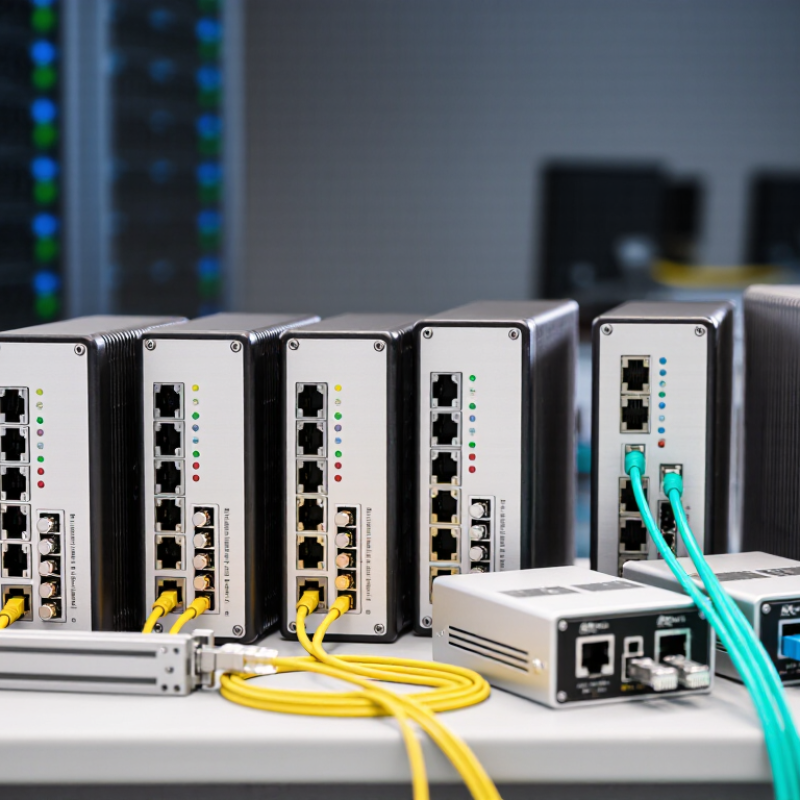
A fiber media converter changes electrical Ethernet signals into optical signals, then converts them back at the destination. It connects copper networks with fiber infrastructure. This simple device helps extend links far beyond standard copper limits. It also reduces exposure to electromagnetic interference in factories, transport sites, and outdoor cabinets.
Its core functions include signal conversion, link extension, and network isolation. Many models support single-mode or multimode fiber. Others handle different speeds, duplex modes, or SFP-based connections. According to Cisco’s Annual Internet Report, 2018–2023, global internet users were expected to reach 5.3 billion in 2023. Connected devices were projected to reach 29.3 billion. This growth increases pressure on reliable access and backbone links. A converter does not create bandwidth by itself. That assumption is easy to miss. It only preserves compatible signals across a suitable fiber path.
Tips: Check fiber type, connector, distance, and data rate before purchasing. Confirm wavelength compatibility on both ends. Test the link under real temperature conditions. In practical deployments, a mismatched optic may show link failure, unstable speed, or intermittent packet loss. The converter should also support the required standards, such as Ethernet or Gigabit Ethernet. Experienced network teams label every fiber pair and record power readings. Small details matter. Reports from the International Telecommunication Union also show continuing global growth in broadband access, making dependable media conversion increasingly important for campus, industrial, and regional networks.
China Best Fiber Media Converter Supplier for Global Buyers
Typical Ethernet Fiber Link Reach by Standard
Fiber media converters connect copper Ethernet equipment with fiber-optic networks. The chart compares commonly specified Ethernet link distances: multimode fiber is typically used for shorter data-center or building links, while single-mode fiber supports longer campus, metro, and inter-building connections. Actual reach depends on the transceiver standard, fiber grade, connectors, loss budget, and network conditions.
How Fiber Media Converters Work in Network Infrastructure
In network infrastructure, a fiber media converter connects copper Ethernet equipment with fiber-optic cabling. Its electrical interface receives data from a switch, camera, or server. The converter then changes those signals into pulses of light. A fiber port carries the light across long distances with low electromagnetic interference. At the receiving end, another converter changes the optical signal back into Ethernet data. The process happens in milliseconds. Users usually notice only a stable link.
Installation details matter. A technician must match fiber type, connector design, transmission distance, and optical wavelength. Single-mode fiber suits longer routes, while multimode fiber often serves shorter building connections.
Link LEDs can reveal power, activity, and duplex status, but they do not prove perfect performance. Inspecting connectors is essential. Dust can weaken the signal. In field work, loose power adapters and mismatched speed settings cause surprisingly frequent faults.
I have also seen a converter blamed for failures caused by damaged patch cords. That mistake wastes time. Testing with an optical power meter and checking switch logs gives stronger evidence.
Reliable equipment should support suitable Ethernet standards, stable temperature operation, and clear diagnostic indicators. A converter is simple, but not careless. Its real value appears when copper devices must communicate across electrically noisy floors, outdoor cabinets, or separated buildings. Proper planning still matters more than the box itself.
Key Specifications for Comparing Global Suppliers
Global buyers comparing a China-based fiber media converter supplier should begin with measurable specifications, not catalog language. ITU’s Facts and Figures 2024 estimates that 5.5 billion people use the Internet, or 68% of the world’s population. This growth increases pressure on access networks, industrial links, and surveillance backbones.
Check fiber type, transmission distance, wavelength, connector design, and data rate. A converter should clearly state whether it supports single-mode or multimode fiber. It should also identify 100M, 1G, or 10G Ethernet operation. IEEE 802.3 standards provide the technical baseline for Ethernet interoperability. Ask for optical power, receiver sensitivity, link budget, and maximum insertion loss. These figures reveal more than “long-distance” claims.
Power and environmental details matter. Confirm input voltage, consumption, operating temperature, humidity tolerance, and surge protection. For outdoor cabinets, an IP rating and tested temperature range are essential. IEC 61753 provides recognized performance requirements for fiber-optic components. Request test reports with serial numbers and calibration dates. Good suppliers should also explain burn-in testing, sampling plans, and failure analysis.
Do not ignore management features. Remote monitoring, link-fault pass-through, VLAN support, and alarm reporting can reduce service visits. Compatibility testing with existing switches is still necessary. I have seen impressive datasheets fail during mixed-vendor trials. That weakness deserves attention. A supplier’s warranty period, replacement process, and documented quality records may matter more than a slightly lower unit price.
Evaluating Manufacturing Quality, Compliance, and Support
Choosing the best fiber media converter supplier requires more than comparing prices. Manufacturing quality appears in small, repeatable details. During factory evaluations, inspect connector polishing, PCB solder joints, enclosure fit, and serial-number traceability. A reliable supplier should provide production records, incoming material checks, and burn-in test results.
Ask how each converter handles temperature changes, voltage variation, and link interruptions. Test a sample in a controlled network, then compare packet loss, optical power, and recovery time. A stable unit should reconnect without manual intervention. Still, one sample proves little. Batch testing matters more. I have seen attractive prototypes fail after several hours of heat exposure. That was a useful warning.
Compliance also needs clear evidence. Request current test reports for relevant safety, electromagnetic compatibility, and environmental requirements. Confirm that documents match the exact model, revision, and destination market. Generic certificates create risk. Support quality is equally practical. Evaluate response times, firmware procedures, replacement policies, and technical documentation before placing a large order. Ask difficult questions. Notice whether answers are specific or carefully vague. No supplier is flawless, and some support promises may weaken after payment. A written service agreement, spare-unit plan, and named technical contact can reduce that uncertainty. The strongest supplier combines disciplined manufacturing, verifiable compliance, and support that remains useful after installation.
Selecting the Best Supplier for Different Buyer Requirements
A reliable fiber media converter supplier must match the buyer’s network, not merely offer a low quotation. The ITU’s Facts and Figures 2023 counted 5.4 billion Internet users worldwide. Stable physical connectivity remains essential. Enterprise buyers may prioritize managed functions, redundant power, and detailed diagnostics. Industrial users often need wide temperature ranges, surge protection, and metal housings. Telecom projects usually require long-distance transmission, strict interoperability, and predictable delivery.
Specifications need evidence.
The OECD Broadband Statistics for 2023 showed fiber represented about 42% of fixed broadband subscriptions across member economies. This growth increases pressure on suppliers to provide consistent optical performance. Ask for test records, wavelength data, transmission distance, insertion loss, and compatibility results. Review ISO-based quality procedures, electrical safety documentation, and region-specific conformity files. Do not accept certificates without traceable test details.
Short frames matter.
A supplier supporting small orders may suit installers and distributors. Larger projects need production capacity, spare-unit planning, firmware control, and responsive technical support. Check sample quality before signing a long-term contract. Compare lead times under normal and peak conditions. A spreadsheet cannot capture every outage or delayed reply. I still think many buyers overvalue unit price and undervalue replacement speed. That judgment can be wrong when volumes are small. A practical supplier should explain limitations clearly, document changes, and offer a realistic service plan for global deployment.


