China Best Police LED Lightbar for Global Buyers?
Choosing the China Best Police Led Lightbar for global buyers requires more than comparing prices or diode counts. Buyers need verified performance, documented compliance, and dependable after-sales support. In daily fleet operations, a lightbar faces rain, road vibration, dust, temperature changes, and frequent switching. Small weaknesses become visible quickly.
The U.S. Department of Energy reports that LED lighting can use at least 75% less energy and last up to 25 times longer than incandescent lighting. This efficiency matters for patrol vehicles, where auxiliary electrical loads affect battery health and maintenance planning. Grand View Research’s automotive lighting analysis also identifies LED technology as a major direction because of its efficiency, design flexibility, and long service life. However, market growth does not guarantee product quality. That assumption needs checking.
A professional Police Led Lightbar evaluation should examine photometric test results, thermal management, ingress protection, EMC performance, warranty terms, and replacement-part availability. Depending on the destination, buyers may also review SAE J595, SAE J845, UNECE Regulation No. 65, and UN Regulation No. 10 requirements. These standards are not interchangeable. Local approval remains essential.
Chinese manufacturers can offer flexible configurations, rapid customization, and competitive production capacity. Yet a polished product page is not evidence of field reliability. Ask for independent test reports, sample validation, wiring diagrams, and clear installation instructions. Inspect the beam pattern at night, not only in photographs. Real procurement is less glamorous. It is careful, repetitive, and sometimes disappointing. This guide compares practical options for buyers seeking safe, compliant, and durable emergency vehicle lighting.
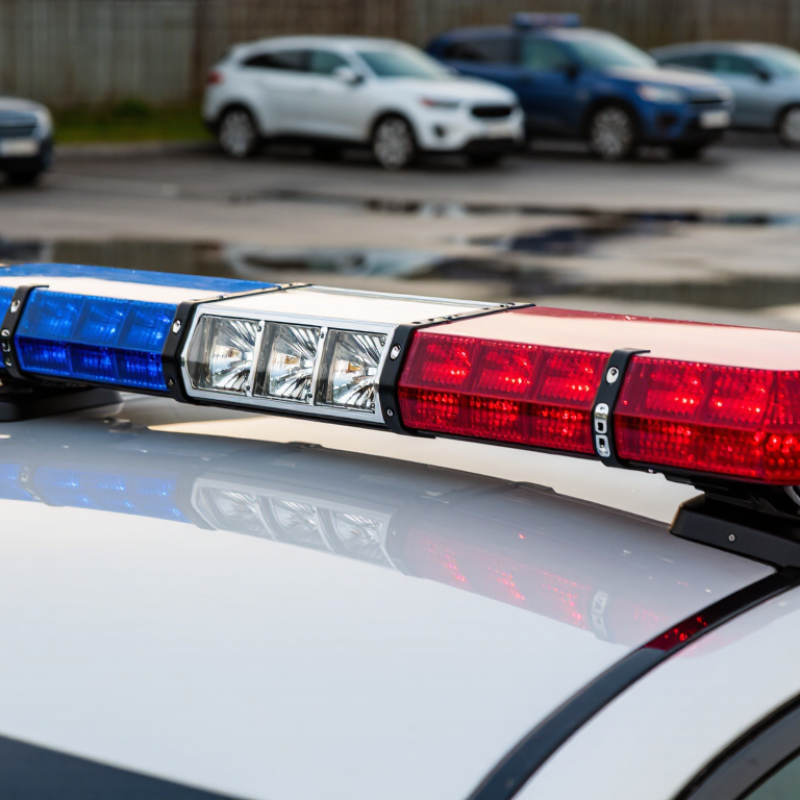
What Defines a High-Quality Police LED Lightbar?
A high-quality police LED lightbar begins with controlled, useful visibility rather than impressive brightness alone. Its optical design should distribute light evenly across intersections, rear angles, and approaching traffic. Dark gaps can create dangerous confusion. A reliable unit also maintains stable output during long operating periods. Heat management matters because excessive temperature can shorten LED and circuit life.
Field conditions reveal more than showroom demonstrations. The housing should resist rain, dust, vibration, and repeated washing. Secure mounting hardware must prevent movement on rough roads. Wiring needs clear labeling, sealed connectors, and sensible strain relief. Small details matter. Poor cable routing can cause avoidable failures.
Buyers should request test records, environmental ratings, electrical specifications, and installation guidance. Documentation should explain current draw, operating voltage, flash patterns, and service procedures. The lightbar should suit the vehicle’s roof size and power system, not simply fit the budget. Independent testing against applicable vehicle-lighting and electromagnetic standards adds confidence. Still, no certificate replaces practical inspection. A sample may perform well in a laboratory but reveal glare, noise, or weak brackets during daily use. That is worth questioning. A careful supplier should discuss limitations, replacement parts, warranty conditions, and regional support openly. Credibility grows through traceable information, not exaggerated claims.
Key Features for Visibility, Safety, and Emergency Communication
China Best Police LED Lightbar for Global Buyers?
Key Features for Visibility, Safety, and Emergency Communication
A dependable police LED lightbar must remain visible in rain, dust, and heavy traffic. Bright output matters, but controlled beam angles matter more. They reduce glare for approaching drivers and nearby officers. Wide-angle modules improve side visibility at intersections. Day and night settings should adjust brightness without distracting road users. Authorized colors and flash patterns must match local requirements.
Durable construction supports safer emergency work. A sealed housing helps protect internal electronics from water and dust. Vibration-resistant mounting prevents movement on uneven roads. Thermal management also matters because LEDs can lose performance under continuous operation. A clear lens should resist yellowing and minor impacts. Small details count.
Communication requires more than flashing lights. A compatible siren, warning speaker, and clear control panel can improve response coordination. Controls should be reachable without forcing the driver to look away. Some systems offer programmable patterns, but excessive options may cause confusion. Simple is often safer. Wiring needs proper protection and professional installation. Poor connections can create intermittent failures at the worst moment.
Independent testing should examine brightness, heat, vibration, water resistance, and electrical stability. Buyers should request measurable specifications, not vague claims. Certification requirements vary by region, so local approval must be checked before purchase. A lightbar can look impressive in a showroom yet perform poorly in winter rain. That possibility deserves honest attention.
Global Standards, Certifications, and Installation Requirements
China Best Police LED Lightbar for Global Buyers?
Global buyers should treat certification as a purchasing requirement, not a marketing claim. A reliable lightbar needs model-specific test documents, serial traceability, and clear operating limits. UNECE R65 may apply in some markets, while UNECE R10 addresses electromagnetic compatibility. North American buyers may require SAE performance testing. Requirements differ by country and vehicle class.
Check the paperwork carefully. Ask for reports from recognized laboratories, not only factory declarations. Confirm photometric results, flash patterns, voltage range, EMC performance, and enclosure protection. An IP67 rating can help against dust and temporary water exposure, but it does not prove complete product quality. Small details matter. Certification names alone are not enough.
Installation should follow the vehicle maker’s instructions and local authority rules. Measure the roof before ordering. The mounting feet must sit evenly, with fasteners tightened to the specified torque. Use a fused circuit, suitable wire size, sealed connectors, and a dependable ground point. Keep cables away from sharp edges, hot surfaces, airbags, and moving parts. Poor routing can cause failures later. Radio interference is another practical concern, especially in crowded vehicle systems. Test the lightbar after installation for vibration, water entry, current draw, and visibility from required angles. I would not rely on a universal mounting kit without checking the roof structure. That shortcut often needs reconsideration.
China Best Police LED Lightbar for Global Buyers?
Global buyers should evaluate a police LED lightbar against regional warning-light regulations, electromagnetic compatibility requirements, and vehicle-environment protection standards. The chart below compares commonly specified IP code examples for vehicle lightbars.
The first IP digit measures protection against solid particles, while the second digit measures protection against water. Higher values indicate a higher test level within the same category; the two categories are not directly comparable. IP ratings do not replace required approvals such as UNECE Regulation No. 65, UNECE Regulation No. 10, SAE J595, or applicable national certification. Installation should also verify voltage compatibility, fuse sizing, cable routing, grounding, mounting strength, visibility, and local emergency-vehicle rules.
Comparing Suppliers, Costs, Warranty, and After-Sales Support
For global buyers, supplier evaluation should begin with product evidence, not attractive photographs. A reliable supplier should provide beam pattern, housing material, ingress protection, voltage range, controller details, and test records. Ask for a sample before placing a larger order. Photos are not enough. Compare response speed, technical accuracy, and willingness to explain limitations. A polished catalog means little when answers remain vague.
Compare the total landed cost, including unit price, sample fees, tooling, packaging, freight, duties, and replacement parts. The cheapest quotation may hide weaker sealing, unstable brightness, or incomplete accessories. Check whether quoted performance applies to the complete lightbar, not only selected components. Small differences in wiring and mounting hardware can affect installation time. Even a careful cost estimate can fail when shipping rates change. That deserves honest discussion.
Warranty terms should define duration, covered failures, evidence requirements, shipping responsibility, and repair times. Ask whether replacement parts are available without returning the entire unit. Effective after-sales support needs a named contact, clear troubleshooting steps, and written case records. Verify regional vehicle-lighting, electromagnetic compatibility, and safety requirements before purchase. A “lifetime” promise sounds reassuring, but it is weak without a practical process. Supplier support may also slow during holidays, and buyers should plan for that.
China Best Police LED Lightbar for Global Buyers? - Comparing Suppliers, Costs, Warranty, and After-Sales Support
Indicative comparison for international buyers; final specifications, prices, and service terms depend on the selected configuration and contract.
| Supplier Type | Typical Product Profile | Indicative FOB Cost
(USD / Unit) | Typical MOQ | Production Lead Time | Standard Warranty | After-Sales Support | Best Suited For |
| Entry-Level OEM Factory | Basic 12 V or 24 V LED lightbar, standard flash patterns, aluminum housing, polycarbonate lens | US$80–180 | 20–50 units | 15–25 working days | 12 months | Email or online technical support; replacement parts usually available on request | Budget-conscious fleets and trial orders |
| Mid-Range Export Manufacturer | High-output LED modules, multiple warning patterns, improved sealing, optional alley and takedown lights | US$150–320 | 10–30 units | 20–35 working days | 18–24 months | Wiring diagrams, installation guidance, remote troubleshooting, and selected spare parts | Municipal, security, and commercial vehicle fleets |
| Custom-Engineering Supplier | Customized length, optics, colors, controller logic, mounting system, and vehicle-specific wiring | US$250–550 | 50–100 units | 30–60 working days, including approval samples | 24 months, subject to contract | Engineering drawings, sample validation, firmware or controller support, and scheduled spare-parts planning | Large tenders, public-sector projects, and recurring procurement |
| Premium Heavy-Duty Supplier | High-intensity optics, reinforced housing, advanced thermal management, low-profile design, and extensive testing documentation | US$400–900+ | 10–30 units | 35–70 working days | 24–36 months, subject to product series | Failure analysis, priority technical support, component replacement, and documented corrective actions | Emergency response, highway patrol, and demanding fleet operations |
| Trading Company with Factory Network | Mixed product portfolio with sourcing flexibility, consolidated shipments, and optional private labeling | US$120–450 | 5–20 units per model | 20–45 working days | 12–24 months, depending on source factory | Centralized communication, inspection coordination, and logistics assistance; technical depth varies | Importers seeking multiple product categories or smaller mixed orders |
Cost Factors
Lightbar length, LED quantity, optical design, controller type, housing material, certification testing, packaging, order volume, and shipping terms can significantly change the final cost.
Warranty Checks
Confirm whether the warranty covers the complete lightbar, controller, wiring, labor, freight, water ingress, LED modules, and normal wear items.
Compliance Checks
Ask for test reports relevant to the destination market, such as electromagnetic compatibility, ingress protection, photometric performance, and vehicle-lighting requirements.
Landed-Cost Reminder
FOB pricing excludes international freight, insurance, customs duty, import VAT or GST, local certification, installation, and possible brokerage charges.
Note: The price and service ranges above are general purchasing benchmarks for comparable Chinese-made LED lightbars, not quotations from a specific supplier. Buyers should obtain a written quotation, pre-production sample, inspection plan, warranty policy, and spare-parts list before placing an order.


