


China Top Substation With Transformer Suppliers?
China’s leading Substation With Transformer suppliers are gaining attention as grid modernization accelerates. Their equipment supports renewable integration, industrial expansion, and increasingly complex transmission networks. However, “top” should not mean the largest factory alone. It should reflect verified performance, safety records, delivery capability, and lifecycle support.
The International Energy Agency’s Electricity Grids and Secure Energy Transitions report estimates that global grid investment must exceed USD 600 billion annually by 2030. That is almost double current levels. The report also highlights the need to add or replace more than 80 million kilometers of grids by 2040. These figures create strong demand for reliable transformers, switchgear, protection systems, and complete substation engineering.
The risk is real.
IEA Executive Director Fatih Birol said, “The world’s electricity grids are facing a major risk of becoming the weak link in clean energy transitions.” His warning is highly relevant to procurement decisions in China. A supplier may offer impressive ratings, polished test reports, and a competitive quotation. Yet field performance depends on thermal design, insulation quality, noise control, monitoring systems, and installation discipline. Small details matter, especially inside a crowded 110 kV or 220 kV substation.
This introduction examines China’s notable suppliers through an evidence-based lens. It considers manufacturing experience, international certifications, transformer efficiency, project references, and after-sales responsiveness. Public data can be incomplete. Supplier claims also require careful verification. That imperfection deserves attention, because a low purchase price may conceal higher maintenance costs, longer outages, or difficult spare-part access.
What Are Substations and Transformers?
What Are Substations and Transformers?
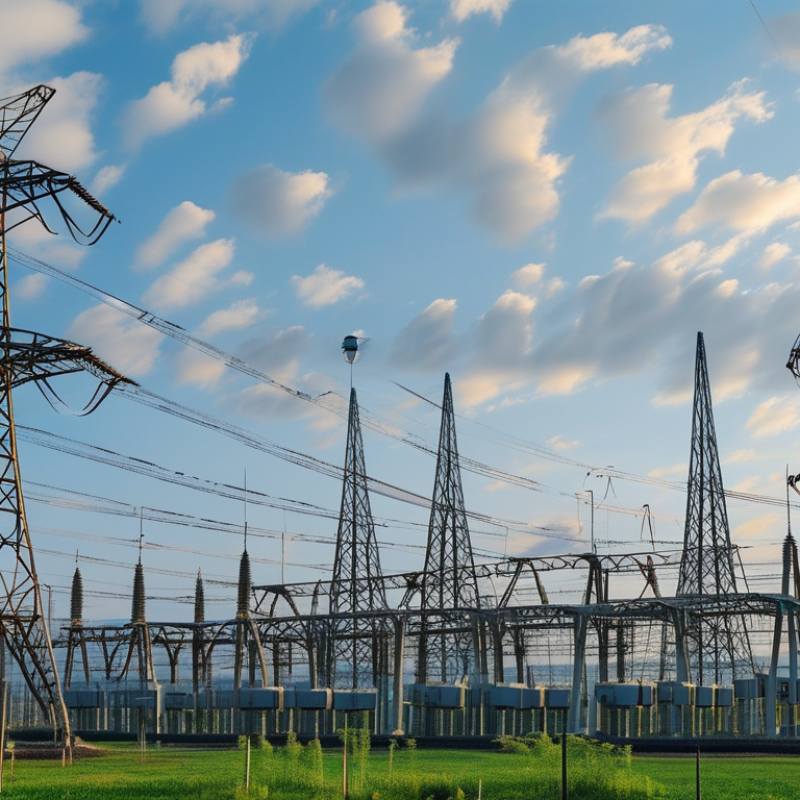
A substation is a controlled electrical facility that changes voltage, directs power, and protects the grid. It connects generating plants, transmission lines, and local distribution networks. Inside, engineers may find circuit breakers, busbars, protection relays, current transformers, and communication equipment. Each device has a specific safety role.
A transformer changes alternating voltage through electromagnetic induction. Step-up transformers raise voltage for efficient long-distance transmission. Step-down transformers reduce voltage for factories, offices, and homes. A large transformer may include cooling radiators, oil-level gauges, porcelain bushings, and temperature sensors. These details matter during operation. Excessive heat can shorten insulation life.
Substations also isolate faults quickly. A relay detects abnormal current, then signals a breaker to open. This action limits damage and reduces outage risks. When evaluating suppliers in China, technical drawings should match tested production units. Factory inspections can check winding quality, enclosure sealing, grounding points, and control wiring. A catalogue rating is not proof of field reliability. That lesson is easy to overlook.
Engineers should review insulation tests, temperature-rise results, noise levels, and routine maintenance requirements. They should also confirm local grid standards and installation conditions. Coastal air, dust, altitude, and winter temperatures can change equipment performance. Specifications sometimes look complete, but small omissions remain. Clear communication between designers, manufacturers, and site teams prevents costly misunderstandings.
China Top Substation With Transformer Suppliers? - What Are Substations and Transformers?
| Data Dimension | Substation | Power Transformer | Typical Engineering Data |
|---|---|---|---|
| Basic Definition | A power-system facility used to transform, switch, control, protect, and distribute electrical energy. | A static electrical machine that transfers AC power between circuits through electromagnetic induction. | A transformer is usually one major item of equipment within a substation. |
| Primary Function | Changes voltage levels, routes power, isolates faults, and connects transmission or distribution networks. | Steps voltage up or down while maintaining the same AC frequency. | The rated frequency is commonly 50 Hz in China and many other countries. |
| Common Voltage Levels | Transmission, sub-transmission, and distribution voltage levels may be combined at one site. | Typical examples include 220/110 kV, 110/10 kV, 35/10 kV, and 10/0.4 kV. | The actual voltage ratio must match the utility interconnection and load requirements. |
| Main Equipment | Transformers, circuit breakers, disconnectors, busbars, surge arresters, instrument transformers, relays, and control systems. | Core, windings, insulation system, tank, bushings, cooling equipment, tap changer, and protection accessories. | Equipment selection depends on voltage, capacity, fault level, installation environment, and operating duty. |
| Substation Categories | Step-up, step-down, switching, collector, distribution, indoor, outdoor, and gas-insulated substations. | Not applicable as a substation category; transformer design is selected according to its application. | Gas-insulated switchgear can reduce the land area required in urban or space-constrained sites. |
| Transformer Types | May contain oil-immersed or dry-type transformers depending on voltage, capacity, fire-safety, and location requirements. | Oil-immersed, dry-type, autotransformer, isolation, grounding, and distribution transformers. | Dry-type units are often preferred indoors; oil-immersed units are widely used for higher capacities. |
| Typical Capacity Range | From small distribution substations to installations rated at several hundred MVA or more. | Distribution units may range from tens of kVA to several MVA; grid transformers can reach hundreds of MVA. | Capacity is normally specified in kVA or MVA and should include expected load growth. |
| Cooling Methods | Uses natural or forced cooling systems for transformers, control rooms, and power-electronic equipment. | Common oil-transformer designations include ONAN and ONAF; dry-type units commonly use natural or forced air cooling. | Cooling selection affects efficiency, noise, footprint, maintenance, and allowable continuous loading. |
| Protection and Safety | Overcurrent, distance, differential, earth-fault, busbar, breaker-failure, and surge protection may be applied. | Protection may include differential relays, overcurrent relays, temperature alarms, pressure relief, and oil-level monitoring. | Earthing, clearances, fire protection, and safe access are essential parts of the design. |
| Tap-Changing Function | May regulate bus voltage through transformer tap changers or other voltage-control equipment. | Off-circuit tap changers require de-energization; on-load tap changers adjust voltage while energized. | Tap range is commonly expressed as a percentage of the rated voltage. |
| Applicable Standards | Design may reference IEC, GB/T, IEEE, or local utility standards, subject to project requirements. | IEC 60076 is a widely used international series for power transformers; GB/T standards are commonly used in China. | The required certification and testing basis should be confirmed before procurement. |
| Key Supplier Evaluation Factors | System integration capability, protection design, testing resources, project references, delivery capacity, and after-sales support. | Efficiency, temperature rise, insulation level, impedance, losses, noise, short-circuit strength, and testing documentation. | A technically compliant design should be evaluated together with total lifecycle cost and service capability. |
| Recommended Procurement Documents | Single-line diagram, load list, site conditions, protection philosophy, grounding study, layout, and commissioning plan. | Technical specification, rated data sheet, guaranteed losses, impedance, accessories list, routine-test report, and installation manual. | Clear technical requirements improve comparability among qualified suppliers without relying only on purchase price. |