How to Choose the Best Red Light Therapy Belt for Wholesale
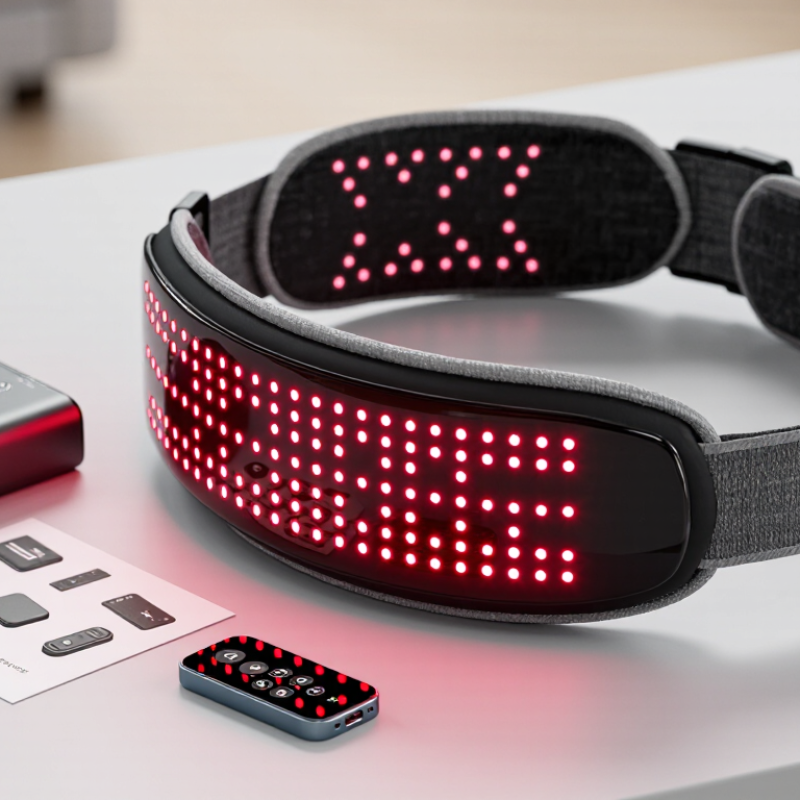
Choosing the right Red Light Therapy Belt for wholesale requires more than comparing prices and glowing product photos. Buyers must examine wavelength accuracy, irradiance consistency, treatment coverage, battery life, comfort, and documented safety testing. A belt may look powerful, yet deliver uneven light across the waist. That matters.
Fortune Business Insights valued the global red light therapy market at approximately USD 1.06 billion in 2023. Its report projects strong growth through 2032, driven by consumer wellness demand and home-use devices. Grand View Research also identifies rising interest in light-based wellness products, especially portable equipment. These figures suggest opportunity, but they do not guarantee product quality. Market growth can hide weak specifications.
Michael R. Hamblin, a leading photobiomodulation researcher, describes the approach as “the use of light to stimulate healing, relieve pain and inflammation, and improve function.” His statement highlights an important distinction: responsible wholesale products should present measurable technical information, not exaggerated promises. Ask suppliers for independent test reports, wavelength ranges, irradiance measurements, timer controls, material details, and clear user instructions. Confirm whether every unit performs consistently.
Small details matter.
A belt with stiff wiring may fail during repeated use. A loose strap can reduce skin contact. An unclear return policy can damage retailer confidence. I have also found that attractive packaging sometimes receives more attention than diode quality, which is not always sensible. The best purchasing decision balances evidence, user experience, supplier transparency, and realistic claims. This guide explains how wholesalers can compare those factors before placing a large order.
Understanding Red Light Therapy Belt Types and Core Features
How to Choose the Best Red Light Therapy Belt for Wholesale
Understanding Red Light Therapy Belt Types and Core Features
Red light therapy belts usually fall into three practical types: flexible wraps, semi-rigid belts, and hybrid designs. Flexible wraps fit the waist, shoulder, or knee more easily. Semi-rigid models hold their shape better, but storage can be less convenient. Hybrid belts often combine adjustable straps with removable LED sections. For wholesale buyers, fit matters more than appearance. A belt that slips during movement will create returns.
Wavelength is a core specification. Many professional protocols use red light near 630–660 nanometres and near-infrared light near 810–850 nanometres. A 2023 review in the Journal of Clinical Medicine linked photobiomodulation outcomes to wavelength, dose, and treatment timing. The numbers must work together. Irradiance shows power density, while fluence shows energy delivered. Higher wattage alone can mislead. It may indicate heat, not better performance.
Check LED coverage, pulse settings, timer control, battery capacity, and heat management. Ask suppliers for independent electrical and photobiological safety testing. Documentation should identify measurement methods, not only promotional claims. Grand View Research’s 2024 market analysis estimated the broader red light therapy market at over 1 billion US dollars, with continued growth expected. Other reports give different totals, which reveals a weakness in market forecasting. I would compare sample data, warranty terms, and batch consistency before accepting a large order. A cheaper belt may become expensive after defects, weak straps, or unclear instructions appear.
Evaluating Wavelengths, Power Output, Coverage, and Treatment Modes
When choosing a red light therapy belt for wholesale, examine wavelength data before appearance or packaging. Red light commonly falls near 630–660 nanometers, while near-infrared light often ranges from 810–850 nanometers. These ranges penetrate differently, so the intended use should guide the selection. Ask suppliers for independent test reports, not only printed specifications. Numbers can look impressive and still lack context.
Power output should be listed as irradiance, measured in milliwatts per square centimeter. A stronger output is not automatically better. Excessive intensity may reduce comfort and shorten practical session times. During product evaluations, measure output at the actual skin distance, not directly against the LEDs. Check whether readings stay consistent across the belt. Small gaps between panels can create uneven treatment. That detail is easy to miss.
Coverage also deserves a physical inspection. A narrow belt may leave untreated areas around the lower back or abdomen. Count the active LED zones and check how well the belt follows body contours. Treatment modes should include clear controls for continuous and pulsed operation, adjustable session times, and stable temperature management. Simpler controls often help wholesale customers train staff faster. I have found that mode variety can sound valuable, yet users may ignore most settings. That assumption needs testing with real users. Ask for durability records, user instructions, and warranty terms before placing a large order. Loose straps, confusing displays, and weak charging ports become expensive problems quickly.
Checking Product Safety, Quality Standards, and User Comfort
Wholesale buyers should treat safety evidence as a purchasing requirement, not a marketing feature. Grand View Research estimated the global light therapy market at about USD 1.1 billion in 2023, with continued growth expected through 2030. This expansion increases the risk of inconsistent testing. Ask suppliers for irradiance measurements, wavelength tolerance, electrical safety reports, and photobiological risk testing under IEC 62471. A bright belt is not automatically a better belt.
Check every technical document carefully. The reported wavelength should match the delivered wavelength, not only the package claim. Request independent laboratory results for thermal performance, battery protection, charging safety, and material composition. The U.S. FDA’s medical-device guidance also emphasizes design controls, risk analysis, labeling, and post-market monitoring. These records show process maturity. They do not prove clinical effectiveness.
Comfort affects real usage. A heavy belt can slide during walking, while stiff wiring may press against the waist. Look for adjustable straps, low surface temperature, flexible housing, washable contact materials, and clear session controls. Human factors research consistently links easier device handling with better adherence, although adherence data for consumer red-light belts remain limited. That gap matters. Some suppliers provide impressive laboratory numbers but no repeated-use testing. Wholesale teams should request sample trials, record skin warmth after twenty minutes, and inspect seams after repeated bending. Evidence is rarely perfect, so purchasing decisions should document both verified strengths and unresolved weaknesses.
Comparing Wholesale Suppliers, Pricing, Minimum Orders, and Customization
Choosing the best red light therapy belt for wholesale requires more than comparing attractive product photos. Ask suppliers for measured wavelength ranges, irradiance data, treatment-area coverage, and test reports. A belt may look bright without producing consistent output across its surface. Request a sample and inspect the fabric, wiring, controller, battery, and charging port. Ask how the device performs after repeated use, not only when it is new.
Wholesale pricing should show every cost clearly. Separate the unit price from packaging, freight, sample fees, tooling, and possible inspection charges. Compare the landed cost, not just the factory quotation. Minimum order quantities often range from small trial batches to several hundred units. A lower MOQ may justify a higher unit price during market testing. Ask about replacement parts, defect handling, payment terms, and production lead times. Do not skip the sample.
Customization may include colors, logos, packaging, straps, controllers, and battery capacity. Confirm whether these changes require new testing or affect the original performance data. Request a pre-production sample and written acceptance standards. Suppliers with traceable production records and documented quality checks offer stronger evidence of reliability. Still, paperwork is not proof. An independent inspection can reveal loose connections, uneven light output, or weak stitching. Some buyers over-customize their first order and increase delays. A simpler launch may be wiser, although it can feel less distinctive. Verify product claims carefully, and avoid presenting the belt as a replacement for professional medical advice.
How to Choose the Best Red Light Therapy Belt for Wholesale
This benchmark compares common wholesale sourcing routes by indicative unit pricing, minimum order quantity, and customization capability. Direct factories generally offer lower prices and deeper customization, while distributors usually provide lower minimum orders and faster purchasing flexibility. Actual quotes vary according to LED wavelength, battery capacity, belt materials, packaging, certifications, and order volume.


