How to Choose the Best Humidity Sensor for Your Needs?
Humidity Sensors play a crucial role in various industries, including agriculture, HVAC, and environmental monitoring. According to a report by ResearchAndMarkets, the global humidity sensor market is expected to grow at a CAGR of 7.2% from 2021 to 2026. This growth highlights the increasing importance of accurate humidity measurements for optimal performance in many applications.
Choosing the right humidity sensor can impact efficiency and product quality. Various types exist, from capacitive to resistive sensors. Each type has its advantages and limitations. For instance, capacitive sensors offer high accuracy and stability but may require more complex circuitry. Knowing these nuances is essential for making an informed decision.
In an age of rapid technological advancement, users must consider specific application needs. Factors like measurement range, response time, and environmental conditions significantly influence performance. It's important to invest time in research and understand available options. Making an informed choice can lead to improved outcomes and address potential challenges down the line.
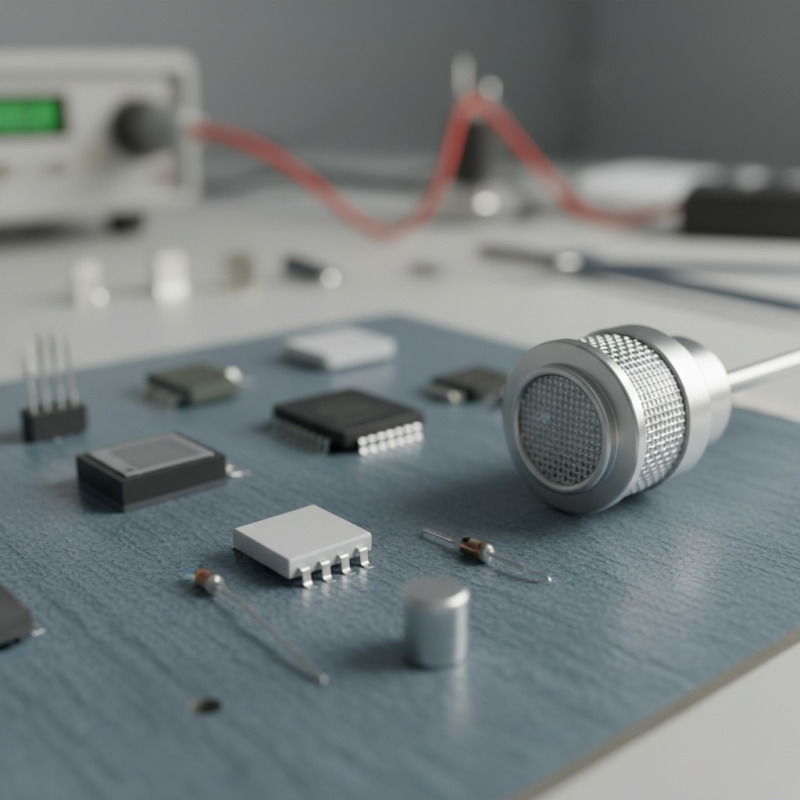
Understanding the Importance of Humidity Sensors in Various Applications
Humidity sensors play a crucial role in various applications, from agriculture to manufacturing. For instance, in agriculture, maintaining optimal humidity levels is essential to enhance crop yield. According to a report by MarketsandMarkets, the global humidity sensor market is projected to reach $2.1 billion by 2025. This growth underscores the increasing demand for reliable humidity monitoring in different industries.
In the HVAC industry, precise humidity control is vital for energy efficiency and occupant comfort. Poor humidity levels can lead to mold growth or excessive energy use. Studies show that a relative humidity level between 40% and 60% is often ideal for indoor environments. Many manufacturers overlook the need for regular calibration of their sensors, which can result in inaccurate readings and poor decisions.
Additionally, humidity sensors are essential in food storage and transportation. Proper humidity control can reduce spoilage. The Food and Drug Administration (FDA) emphasizes maintaining specific humidity levels to ensure food safety. Despite the importance of these measurements, many industries still do not prioritize sensor maintenance. This oversight can lead to significant economic losses and health risks.
Key Types of Humidity Sensors: Capacitive, Resistive, and Thermal
When choosing a humidity sensor, understanding the key types is essential. Capacitive sensors detect humidity by measuring changes in electrical capacitance. They are often used in applications that require accuracy. These sensors perform well in stable environments, but can be affected by temperature variations.
Resistive sensors work differently. They measure humidity levels through changes in electrical resistance. These are typically more affordable and easier to integrate. However, their accuracy can diminish in high-humidity environments. Users should be aware of this limitation.
Thermal sensors rely on temperature changes caused by evaporation. They can be quite reliable, but they require careful calibration. These sensors are better suited for controlled conditions.
**Tips**: Always consider your environment when selecting a sensor. Regular calibration can improve accuracy. Monitoring sensor performance will ensure reliable data. Remember, a perfect sensor does not exist, which may lead to insightful adjustments.
Evaluating Accuracy and Sensitivity: What to Look for in Humidity Sensors
When selecting a humidity sensor, accuracy is key. An accurate sensor reports the true humidity levels in your environment. Poor accuracy can lead to ineffective humidity control, resulting in damage to equipment or discomfort. Look for specifications that indicate a low percentage of error. A good sensor might have ratings of 2% or less, which ensures reliable performance.
Sensitivity is equally important. A highly sensitive sensor can detect even slight changes in humidity. This is vital in environments where precision is necessary, like laboratories or storage facilities. Some sensors may struggle with rapid fluctuations. This can affect their ability to provide real-time data. Therefore, evaluating the response time of a sensor can make a significant difference in its effectiveness.
Additionally, consider durability. Humidity sensors face diverse conditions. A sensor placed in a moist area may corrode quicker. Ensure the materials used can withstand your specific conditions. Regular calibration is also crucial. A sensor that hasn't been calibrated may provide misleading readings. This can lead to over-dependence on faulty data, emphasizing the need for frequent checks and maintenance.
Consideration of Environmental Factors: Temperature Range and Pressure
When selecting a humidity sensor, it's crucial to consider environmental factors like temperature range and pressure. These elements can significantly affect sensor performance and accuracy. For instance, some sensors operate optimally within a specific temperature range. A sensor that works well in a warm climate may fail in cold conditions. Understanding the temperature fluctuations in your environment can aid in making a suitable choice.
Pressure also influences sensor readings. Humidity sensors may calibrate differently based on atmospheric pressure. If your application involves varying altitudes, look for sensors that maintain accuracy despite these changes. Reviewing technical specifications is essential to ensure the sensor meets your needs.
**Tips**: Always check the manufacturer’s data sheets for performance metrics. This ensures the sensor’s reliability in your specific conditions. Test the sensor in real environments if possible. It helps identify any discrepancies early on. Make adjustments based on real-time feedback. This proactive approach can save time and enhance accuracy.
How to Choose the Best Humidity Sensor for Your Needs?
| Sensor Model | Temperature Range (°C) | Pressure Range (kPa) | Humidity Range (%) | Response Time (s) |
| Model A | -40 to 85 | 50 - 110 | 0 - 100 | 3 |
| Model B | -20 to 70 | 70 - 120 | 10 - 90 | 5 |
| Model C | 0 to 50 | 80 - 150 | 20 - 70 | 2 |
Assessing Calibration and Maintenance Needs for Long-Term Reliability
Selecting a humidity sensor involves understanding its calibration and maintenance needs. Proper calibration ensures accurate readings. Over time, sensors can drift from their original settings. This can lead to unreliable data, impacting your applications. Regular calibration checks help maintain sensor accuracy.
Consider the environment where the sensor will be used. Humidity levels can fluctuate. Factors like temperature and air pressure also play a role. Thus, it’s crucial to choose a sensor that can withstand these changes. Verify how often recalibration is necessary to keep data reliable.
Tips: Check the manufacturer’s guidelines on calibration intervals. Document maintenance routines to identify patterns over time. Remember, a wellaintained sensor is a reliable sensor. If you notice irregular readings, it might be time to recalibrate. Listening to your sensor's feedback is vital for long-term performance.


