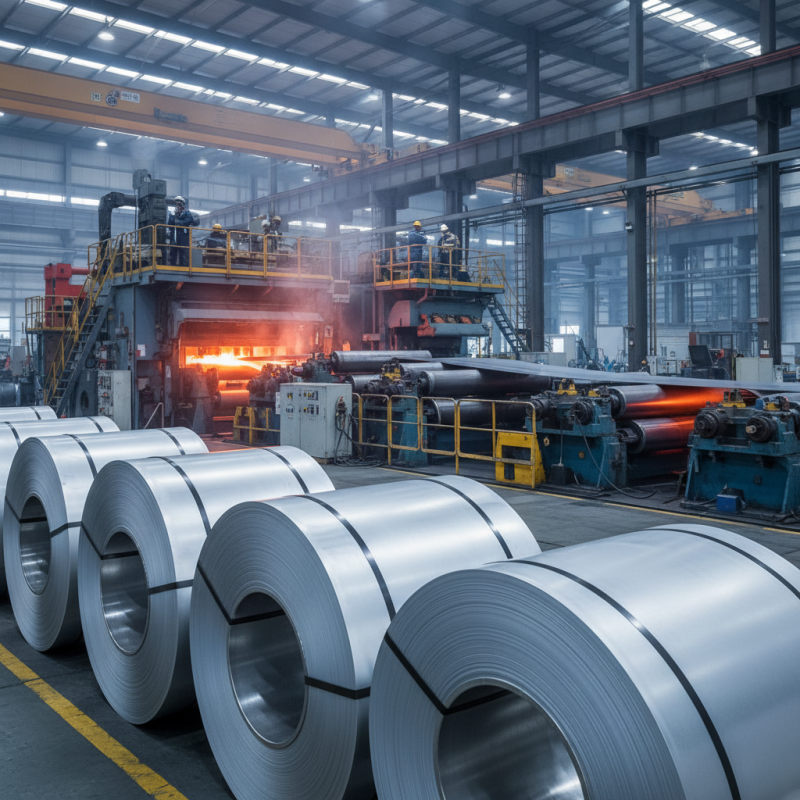
What is Cold Rolled Coil and How is it Used?
Cold Rolled Coil is a vital material in many industries. It is made from hot rolled steel that undergoes further processing. This process enhances its strength and surface finish. The result is a smooth and precise product, ideal for various applications.
In construction, Cold Rolled Coil is used for structural components. It is also applied in manufacturing appliances and automotive parts. The consistent thickness of this coil enhances the quality of the final product. However, some challenges arise during production. Factors like temperature fluctuations can influence the material's properties.
Designers appreciate Cold Rolled Coil for its versatility. Yet, producing a perfect coil is complex. Small imperfections can affect performance. Therefore, quality control is essential throughout the manufacturing process. By understanding these aspects, we can better appreciate Cold Rolled Coil's significance in modern industry.
Understanding Cold Rolled Coil: Definition and Characteristics
Cold rolled coil is an essential steel product. It is made by rolling steel at room temperature. This process enhances the finish and precision of the material. The end result is a steel that is smooth and uniform. Cold rolled coil often showcases a glossy surface. This makes it preferable for many applications.
Understanding cold rolled coil requires knowing its characteristics. The thickness is generally less than hot rolled steel. It often measures between 0.2 mm to 4.0 mm. The strength of cold rolled steel is higher than its hot-rolled counterpart. This characteristic comes from the strain hardening that occurs during production. However, it can be more prone to cracking if not handled properly.
Applications of cold rolled coil vary widely. Industries often use it in automotive manufacturing and construction. It is also popular in appliances and furniture production. The aesthetics of cold rolled surfaces can enhance the final product. Yet, without proper treatment, it may rust over time. Understanding its properties aids in selecting the right material for projects.
Usage of Cold Rolled Coil in Different Industries
The Manufacturing Process of Cold Rolled Coil: A Detailed Overview
Cold rolled coil is a significant product in metalworking. Understanding its manufacturing process is crucial. The process begins with hot rolled steel. This initial material is coiled and cooled. Next, it undergoes a series of mechanical processes.
The cold rolling process takes place at room temperature. First, the hot rolled coils are cleaned to remove impurities. Then, they are sent through rollers that reduce their thickness. This phase is essential for achieving the desired gauge. The steel may also undergo annealing, a heat treatment that enhances its ductility.
Finally, the coils are carefully inspected. Processing methods can sometimes leave surface defects. These uneven areas warrant attention. Manufacturers should use precise techniques to improve quality. Careful monitoring and adjustments can minimize flaws. It's vital to reflect on these aspects for continuous improvement in cold rolled coil production.
Applications of Cold Rolled Coil in Various Industries and Sectors
Cold rolled coil (CRC) is a versatile material used in various industries. Its applications are broad, thanks to its refined surface and precise dimensions. In construction, cold rolled steel is crucial for building frames and structural components. According to a recent industry report by the World Steel Association, the construction sector accounts for over 50% of cold rolled steel usage. This highlights its importance in modern architectures and infrastructures.
In the automotive industry, CRC is essential for manufacturing car panels and components. The demand for lightweight vehicles has increased the use of cold rolled products. A recent study cited that about 30% of the global automotive steel market comprises cold rolled steel. Yet, challenges remain. The production process must ensure consistency. Any deviation affects quality. This industry grapples with overcoming production inefficiencies.
Additionally, cold rolled coil is used in appliances like refrigerators and washing machines. It provides an appealing finish and durability. The appliance sector's reliance on CRC is significant. Figures suggest that it holds about 15% of the global cold rolled usage. However, with rising sustainability concerns, CRC manufacturers are under pressure to innovate. They must balance quality and environmental impact.
Industry Standards and Specifications for Cold Rolled Coil Products
Cold rolled coil is a widely utilized material in various industries. Its production involves processes that enhance its strength and aesthetic appeal. Due to these advantages, many industries adopt specific standards and specifications to ensure quality and compatibility.
Industry standards are crucial for cold rolled coil products. Organizations like ASTM and ISO provide guidelines on thickness, width, and other critical parameters. These standards help manufacturers produce coils that meet safety and performance criteria. For example, a cold rolled coil must have consistent thickness for proper processing in subsequent applications. Variability in thickness can cause issues during manufacturing.
It is essential to reflect on these standards. Some manufacturers may cut corners, compromising quality. This can lead to failures or safety hazards in final products. Therefore, applying industry specifications is not just a formality, but a necessity for reliability and performance. Failing to comply can have serious consequences for businesses and consumers alike. Quality control measures must be in place to uphold these guidelines effectively.
What is Cold Rolled Coil and How is it Used?
| Specification | Description | Applications |
| ASTM A1008/A1008M | Standard Specification for Steel, Cold-Rolled, Carbon, Structural, and High-Strength Low-Alloy, and Alloy Steel Sheet, and Strip for Use in Building Components | Used in automotive bodies, appliances, and furniture |
| EN 10130 | Cold rolled low carbon steel flat products for cold forming | Used in metal forming and deep drawing applications |
| JIS G3141 | Cold-reduced carbon steel sheets and strips for general purposes | Used in various household products and structural applications |
| ISO 3574 | Cold-reduced low-carbon steel sheet for general use | Commonly used in the production of shell containers and outer panels |
| ASTM A366/A366M | Standard Specification for Steel, Cold-Rolled, Carbon, Sheet, and Strip for Electrical and General Purposes | Applied in electrical appliances and general manufacturing |
Comparative Analysis: Cold Rolled Coil vs. Hot Rolled Coil
Cold rolled coil (CRC) and hot rolled coil (HRC) are two key materials in manufacturing. They differ significantly in their processes and properties. CRC is produced by further processing HRC at room temperature. This method enhances its strength and finishes. The smoother surface of CRC makes it ideal for applications requiring aesthetic appeal. However, it can be more brittle than HRC.
HRC, on the other hand, is made at high temperatures. This process allows it to retain more ductility. However, the surface finish is rougher, which may not be suitable for visible applications. HRC is often used in construction and heavy machinery due to its toughness. In contrast, CRC is frequently utilized in the automotive industry. It provides better surface quality for painting and coating.
When considering the choice between CRC and HRC, think about the intended use. CRC is preferable for parts requiring precision and a fine finish. HRC works well for components that can handle stress without requiring cosmetic appeal. Each option has its trade-offs. One should analyze specific project demands carefully before making a decision.