JHY PCB Blog Hub
Your Source for Expert PCB Design, Manufacturing, and Assembly Insights – Stay Informed with 2025 Trends!
What Is an Insulation Membrane and How Does It Work?
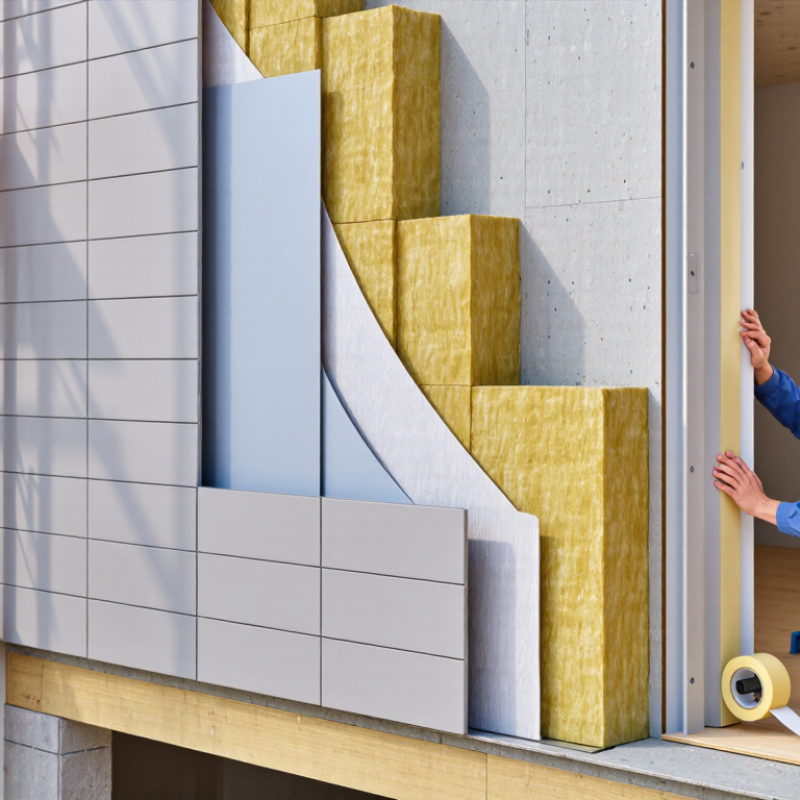
An Insulation Membrane is more than a thin layer placed inside a wall. It is part of a building’s environmental control system. Depending on its design, it can reduce heat transfer, limit air movement, resist moisture, or manage vapor diffusion. Some products combine several functions, while others perform only one. Confusing these roles can create expensive problems.
Dr. Joseph Lstiburek, a respected building-science expert, explains, “The perfect wall is an environmental separator.” This idea helps clarify how an Insulation Membrane works. It separates warm indoor air from cold exterior surfaces. It can also protect insulation from wind washing and reduce hidden condensation risks. In practice, installers must seal overlaps, repair punctures, and press tapes firmly against clean surfaces. Small gaps matter.
The material alone cannot guarantee performance. A membrane works as part of a continuous assembly, including insulation, cladding, flashing, and ventilation. For example, a roof membrane may face strong sunlight, driving rain, and repeated temperature changes. Wall systems face different pressures. Product ratings, climate conditions, and installation details should guide the specification.
The details decide everything.
Experience also reveals an uncomfortable truth: even a premium membrane can fail when poorly installed. Site inspections should check seams, corners, penetrations, and transitions around windows. Moisture readings can expose trouble before stains appear. Still, no single inspection method is perfect. Careful design, qualified installation, and honest maintenance records make the system more reliable. This article examines the main membrane types, their working principles, and the practical mistakes that often reduce their value.
Definition and Purpose of an Insulation Membrane
An insulation membrane is a thin building-envelope layer that controls air, moisture, vapor, or radiant heat. Its exact meaning varies by region and construction practice. The term is not perfectly standardized. In professional specifications, it may describe a vapor-control layer, air barrier, weather-resistant membrane, or reflective surface. It usually supports insulation rather than replacing it.
Its purpose is practical. The membrane limits warm, humid air from reaching cold surfaces where condensation can form. It also reduces wind washing, protects insulation from rain, and helps maintain the designed thermal resistance. A reflective membrane needs an adjacent air space to work effectively. Without that gap, its radiant performance may be overstated. The U.S. Department of Energy identifies air sealing as a major part of building energy efficiency, while the International Energy Agency reported that buildings used about 30% of global final energy in 2022. Small envelope defects can therefore create measurable comfort and energy problems.
During envelope inspections, common failures include torn membranes, poorly sealed joints, and unprotected penetrations around pipes. These details matter more than impressive product claims. ASHRAE guidance emphasizes continuous air and vapor control, but the correct layer depends on climate, wall design, and indoor humidity. A membrane that performs well in a dry climate may trap moisture in a humid one. Designers should verify dew-point risks, drainage paths, and installation quality before selecting the material. Performance is sometimes less perfect than drawings suggest.
Key Materials and Structural Features
What Is an Insulation Membrane and How Does It Work?
An insulation membrane is a thin protective layer around building insulation. It controls air movement, water entry, and vapor transfer. It is not insulation itself. Its performance depends on material choice and installation accuracy.
Common materials include polyethylene films, polypropylene nonwoven sheets, polyester reinforcement, and bitumen-modified membranes. Polyethylene usually provides strong vapor resistance. Polypropylene sheets can remain more vapor-open, allowing trapped moisture to escape. Some membranes use several layers: a weather-resistant outer film, a reinforcing grid, and a functional inner layer. This structure improves tear resistance without adding much weight. Overlaps, sealed penetrations, and firmly bonded edges are essential. A small unsealed joint can undermine a large insulated wall.
The International Energy Agency reported that buildings accounted for about 30% of global final energy use in 2022. The U.S. Department of Energy also estimates that air leakage can represent 25–40% of heating and cooling energy use in typical homes. These figures explain why airtight membranes matter. However, airtightness must not replace moisture design. A highly sealed layer placed on the wrong side can trap condensation inside a wall. That distinction is easy to miss. On site, damaged corners and poorly sealed service openings remain common weak points. Membrane selection should follow climate, assembly position, vapor permeability, and local testing requirements. Manufacturer data alone is not enough; real performance depends on detailing and workmanship.
How an Insulation Membrane Controls Heat and Moisture
What Is an Insulation Membrane and How Does It Work?
An insulation membrane controls heat and moisture by managing movement through a building envelope. It may sit beneath roofing, behind cladding, or around insulated walls. Some membranes reflect radiant heat, while others slow conductive heat transfer. Their performance depends on correct placement and continuous coverage.
Moisture control is equally important. A vapor-control layer limits water vapor entering colder wall cavities, where condensation can form. A water-resistant membrane can block wind-driven rain while allowing trapped vapor to escape. Air leaks often carry more moisture than expected. Small gaps around pipes, windows, and electrical boxes can weaken an otherwise careful installation. It is easy to treat every membrane as a universal solution, but that assumption needs reconsideration. Climate, indoor humidity, and wall design all affect the result.
Tips: Check the membrane’s permeability rating before installation. Seal overlaps, edges, and penetrations with compatible materials. Leave no accidental openings. During inspection, look for damp insulation, staining, or musty odors. These signs may indicate poor drainage or incomplete air sealing, not simply “wet insulation.” A qualified building professional can assess condensation risk before materials are covered.
What Is an Insulation Membrane and How Does It Work? - How an Insulation Membrane Controls Heat and Moisture
| Membrane or Layer Type | Main Purpose | How It Controls Heat | How It Controls Moisture | Typical Location | Typical Performance or Property | Important Installation Consideration |
|---|---|---|---|---|---|---|
| Vapor-control membrane | Limit water vapor diffusion through the building assembly. | It does not provide significant insulation by itself; it helps preserve the effectiveness of surrounding insulation by reducing moisture accumulation. | Restricts vapor movement from the warmer or more humid side, depending on the climate and assembly design. | Usually on the warm-in-winter side of insulation in cold climates; placement varies by climate zone and wall design. | Vapor permeance is commonly classified as impermeable, semi-impermeable, semi-permeable, or permeable under building standards. | Seal laps, joints, penetrations, and service openings to maintain continuity. |
| Breathable water-resistive membrane | Stop wind-driven rain while allowing trapped vapor to escape. | Reduces air movement across insulation, helping prevent wind washing and unwanted convective heat loss. | Repels liquid water from the exterior while permitting water vapor diffusion toward the outside. | Outside the sheathing and behind the exterior cladding. | Designed to be water-resistant and vapor-permeable; exact permeance and water-resistance ratings vary by product and standard. | Install shingle-style with properly integrated flashings around windows, doors, and roof-wall transitions. |
| Air-barrier membrane | Reduce uncontrolled air leakage through the building envelope. | Limits convective heat transfer caused by air moving through gaps in walls, roofs, and floors. | Reduces moisture carried by air leakage, which can otherwise cause condensation inside assemblies. | May be installed on the interior, exterior, or within the assembly, depending on the envelope design. | Air leakage is evaluated at a specified pressure difference; low air leakage is the desired result. | Continuity is essential. Pay special attention to corners, fasteners, service penetrations, and transitions between materials. |
| Radiant-reflective membrane | Reflect radiant heat, particularly in roof and attic applications. | A low-emissivity surface reflects a portion of infrared radiation instead of absorbing it. | Some products also act as vapor or air control layers, but this function must be verified separately. | Facing an adjacent air space, commonly beneath a roof or above attic insulation. | Requires an adjacent air space to provide meaningful radiant resistance; it is not a direct replacement for bulk insulation. | Keep the reflective surface clean and unobstructed where the design depends on radiant reflection. |
| Insulated membrane or composite blanket | Combine a thin insulation layer with one or more control layers. | Slows conductive heat flow through enclosed gas cells, fibers, or foam, while the facing may reduce air movement or radiant transfer. | May resist liquid water and vapor, depending on the facing and core; it should not be assumed to dry in both directions. | Walls, roofs, floors, ducts, tanks, and other areas requiring a thin multi-function layer. | Thermal resistance is normally reported as an R-value or U-factor for the tested assembly. | Avoid compression, gaps, and thermal bridges; follow the required clearances for adjacent heat sources. |
| Drainage-plane membrane | Provide a controlled path for water that penetrates behind exterior cladding. | Can reduce wetting of insulation and sheathing, helping the assembly retain its intended thermal performance. | Directs liquid water downward and outward while some designs allow drying by vapor diffusion or ventilation. | Behind cladding, often with a small drainage or ventilation cavity. | Performance depends on water resistance, drainage openings, laps, and the continuity of flashings. | Maintain unobstructed drainage paths and integrate the membrane with sill, head, and corner flashings. |
Common Types and Installation Methods
An insulation membrane controls moisture, air movement, or heat transfer around an insulated building area. It is not insulation itself. Its role depends on the building’s climate, wall design, and indoor humidity.
Common types include vapor-control membranes, breathable weather-resistant membranes, and reflective foil membranes. A vapor-control layer usually sits on the warm side of insulation, limiting condensation inside the wall. Breathable membranes are commonly fitted outside insulation, allowing trapped vapor to escape while blocking wind-driven rain. Reflective foil works best when it faces a clear air gap. Without that gap, its thermal benefit may be limited. Liquid-applied membranes can seal irregular surfaces, but they require careful coverage and drying time.
Installation quality often matters more than the membrane type. Sheets should overlap according to the technical instructions, with seams sealed using compatible tape or sealant. Around windows, pipes, and electrical penetrations, installers should create continuous seals. Small gaps matter. A poorly sealed corner can reduce airtightness across an entire wall section. In roof spaces, the membrane must not block designed ventilation channels. Local building regulations and moisture-control guidance should always be checked before work begins.
I have seen neat installations fail because the wrong side faced inward. That mistake is easy to miss. Dust, rain, and rushed cutting can also weaken adhesion. Inspect the surface first, keep the membrane flat, and repair punctures immediately. A simple site checklist helps, although it cannot replace experienced judgment.
Insulation Membranes: Typical Vapor Permeance by Membrane Type
How to read the chart: Vapor permeance is measured in US perms; a lower value indicates stronger resistance to water-vapor diffusion. Values shown are representative ranges commonly associated with each membrane type, and actual performance depends on the product, thickness, seams, and installation quality.
Installation basics: Polyethylene sheets and foil-faced boards are normally installed as continuous interior vapor-control layers with sealed laps and penetrations. Bituminous membranes are commonly bonded or mechanically fastened over prepared surfaces with overlapped joints. Smart vapor retarders are installed continuously on the warm-in-winter side of the insulation, while breathable weather-resistive membranes are placed on the exterior and lapped to shed water. All membranes require sealed edges, taped or bonded joints, and careful detailing around windows, doors, outlets, and service penetrations.
Factors Affecting Performance and Service Life
An insulation membrane controls heat, air, and moisture movement through a building envelope. Its performance depends on more than its stated thermal rating.
The International Energy Agency reports that buildings consume about 30% of global final energy. Small envelope failures can therefore create meaningful energy losses.
Moisture is often the hidden threat. A puncture near a pipe, an open lap, or poor edge sealing can allow condensation behind the membrane. Research methods under ISO 12572 measure water-vapour transmission, but laboratory results cannot predict every wall assembly.
Climate, indoor humidity, solar exposure, and installation quality change real performance. Field inspections matter.
The U.S. Department of Energy notes that air sealing and insulation upgrades can reduce heating and cooling costs, although savings vary by climate and building condition.
Membranes exposed to ultraviolet light, heat, or repeated movement may age faster than expected. Dust can also weaken adhesive bonds. This is easy to overlook.
Good installation includes clean substrates, controlled overlaps, and protected penetrations. Service life improves when drainage paths remain open and the membrane stays within its intended temperature range.
Yet no product should be judged by a single test value. A higher vapour resistance is not automatically better. In some walls, it may trap moisture. That deserves a second review.


