JHY PCB Blog Hub

Your Source for Expert PCB Design, Manufacturing, and Assembly Insights – Stay Informed with 2025 Trends!

What Are the Top 10 Types of LED Tunnel Lights?

What Are the Top 10 Types of Led Tunnel Lights?

Tunnel lighting is not simply a brighter version of highway lighting. It must guide drivers through darkness, glare, dust, water, and sudden daylight. The right Led Tunnel Light supports visibility, visual comfort, energy efficiency, and long service life. CIE 88 and PIARC tunnel guidance emphasize threshold lighting, transition zones, interior lighting, exit lighting, uniformity, and glare control. These principles shape the ten types discussed in this outline.

Energy use also matters. The International Energy Agency reports that lighting consumes roughly 15% of global electricity. Efficient tunnel systems can reduce waste through dimming, adaptive controls, and daylight-responsive operation. The U.S. Department of Energy’s solid-state lighting research also highlights higher efficacy, improved controls, and longer operating life as major LED advantages. Numbers vary by tunnel design. Real performance depends on traffic, road surface, mounting height, climate, and maintenance.

Dr. John D. Bullough, a recognized lighting researcher, expresses the central idea clearly: “Design for the visual task, not merely for brightness.” That sentence deserves attention. A powerful fixture can still create glare, dark patches, or uncomfortable transitions. This list therefore considers more than wattage. It examines tunnel entrance lights, threshold lights, transition lights, interior linear fixtures, jet-fan compatible units, emergency lights, explosion-resistant designs, dimmable systems, smart-control fixtures, and high-output exit lights. The categories overlap slightly. That is intentional, because tunnel projects rarely fit neat boxes. Performance must be tested on site, not assumed from a product brochure.
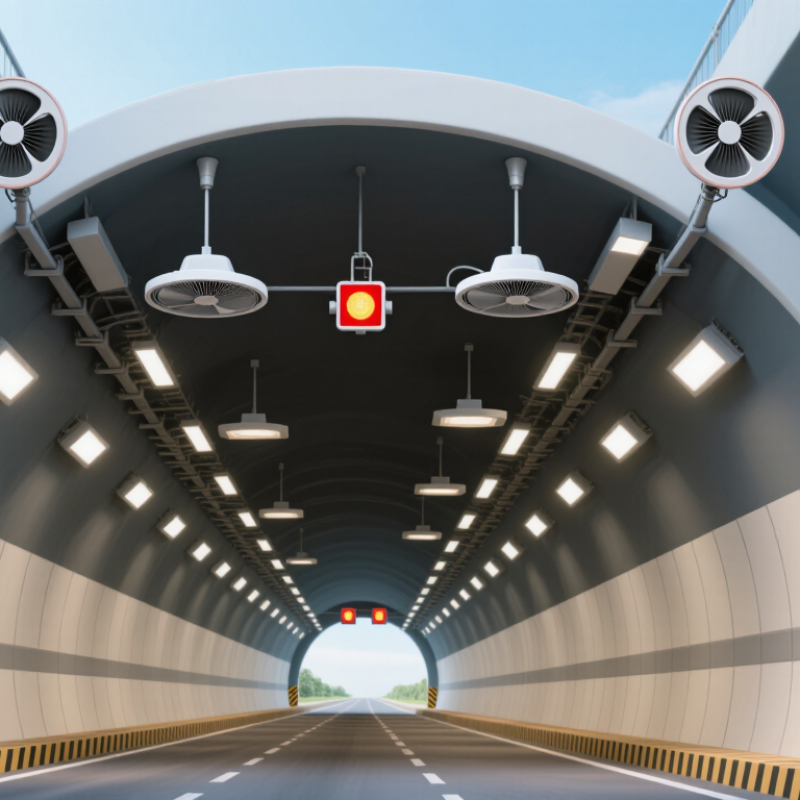
What Are the Top 10 Types of LED Tunnel Lights?

LED Tunnel Lights: Purpose, Structure, and Classification

What Are the Top 10 Types of LED Tunnel Lights?

LED Tunnel Lights: Purpose, Structure, and Classification

LED tunnel lights provide continuous visibility for drivers, workers, and maintenance teams. Their purpose changes with tunnel length, traffic speed, geometry, and emergency requirements. Visibility comes first. Common classifications include ten practical types: entrance, transition, interior, exit, jet-fan, wall-mounted, ceiling-mounted, recessed, linear, and explosion-resistant tunnel lights. Each type serves a different lighting zone or installation condition.

Entrance lights handle the sharp change between daylight and darkness. Transition lights reduce glare as drivers move deeper inside. Interior lights maintain steady brightness across the central section. Exit lights support visual adaptation near the tunnel opening. Jet-fan tunnel lights are positioned around ventilation equipment, while wall-mounted units suit narrow service areas. Ceiling-mounted fixtures distribute light evenly over traffic lanes. Recessed models create a cleaner profile and reduce collision exposure. Linear lights produce continuous illumination with fewer dark gaps. Explosion-resistant designs suit environments requiring stronger protective enclosures.

Most fixtures contain LED modules, heat sinks, optical lenses, drivers, seals, and mounting brackets. The optical system controls beam spread and limits discomfort glare. Heat management affects service life, especially beneath concrete ceilings. In real projects, dust, water spray, vibration, and cleaning chemicals can change performance. IP protection matters. Emergency circuits may use separate power supplies and controls. However, no classification fits every tunnel perfectly. A recessed fixture may look efficient, yet repairs can take longer. Field testing, photometric checks, and maintenance access should guide the final selection.

The First Three Types: Basic, Linear, and Modular LED Tunnel Lights

What Are the Top 10 Types of LED Tunnel Lights? The First Three Types: Basic, Linear, and Modular LED Tunnel Lights

Basic LED tunnel lights are direct replacements for older fixtures. They suit short tunnels, service passages, and simple lighting zones. Their compact housings simplify installation, while asymmetric optics direct light toward the roadway. However, a basic fixture can create bright patches if spacing and beam angles are poorly matched. The IEA’s Energy Efficiency 2024 report states that LEDs now represent more than half of global lighting sales. That shift reflects lower energy use, longer service life, and improved control options.

Linear LED tunnel lights create a continuous visual line along the ceiling or sidewall. They are useful where road uniformity matters, especially in long, straight tunnels. Their narrow profile reduces visual clutter and can support smoother luminance transitions at entrances. The U.S. Department of Energy’s 2023 Solid-State Lighting R&D Opportunities report identifies LED package efficiencies above 200 lumens per watt in advanced products. Actual tunnel luminaires perform lower after optics, drivers, and heat losses. The difference matters.

Modular LED tunnel lights divide the system into replaceable sections. Maintenance teams can change one module instead of removing a full fixture. This design supports different beam patterns, emergency zones, and future upgrades. It also introduces more joints and connections, which require careful sealing and inspection. No layout is perfect. Dust, water, vibration, and driver heat can still reduce performance when specifications look impressive on paper.

The Next Four Types: High-Bay, Waterproof, Explosion-Proof, and Solar Models

High-bay LED tunnel lights suit tall tunnels, service galleries, and cavernous underpasses where mounting points sit far above traffic. Their focused beams reduce dark patches on the road surface. In field inspections, I look for uniform illumination, low glare, and accessible drivers. A bright fixture can still perform poorly if its beam creates sharp stripes.

Thermal management also matters. Concrete ceilings hold heat, especially during summer traffic. A strong housing and tested surge protection improve reliability, but installation quality remains critical.

Waterproof tunnel lights are built for spray, condensation, dust, and occasional flooding. Check the IP rating, cable glands, seals, and drainage details rather than trusting appearance alone. Small gaps can admit moisture.

Explosion-proof models require greater discipline. They are designed for locations where flammable gas or dust may exist, and their certification must match the site classification. Ordinary sealed lights are not suitable substitutes. Confirm temperature ratings, enclosure construction, and approved installation methods with a qualified professional.

Solar tunnel lights can support remote approaches, emergency routes, or areas with limited grid access. Their performance depends on panel exposure, battery capacity, winter temperatures, and accurate energy calculations. A cloudy week may expose an optimistic design. Periodic cleaning and battery testing are often overlooked. That is where many projects become less reliable than expected.

The Final Three Types: Intelligent, Dimmable, and Tunnel Entrance Lights

The final three types of LED tunnel lights deserve close attention: intelligent, dimmable, and tunnel entrance lights. Intelligent LED tunnel lights use sensors, controllers, and monitoring software to adjust operation. They can respond to traffic flow, daylight, temperature, and equipment faults. During maintenance checks, engineers can identify dark sections before drivers report them. This improves reliability, but intelligent controls are not automatically perfect. Poor sensor placement can create unnecessary changes in brightness.

Dimmable tunnel lights reduce output when traffic and daylight conditions allow it. A well-designed system lowers energy use without creating dark patches or uncomfortable contrast. Engineers should test several dimming levels inside the tunnel, not only at the control cabinet. In practice, drivers notice uneven light quickly. A small delay can also affect visual comfort. That detail is easy to overlook.

Tunnel entrance lights handle the most demanding visual transition. Drivers move from bright sunlight into a darker space, or from darkness toward daylight. Strong entrance lighting helps the eyes adapt and reduces sudden contrast. Photometric testing should consider season, weather, road direction, and pavement reflection. Adjustable fixtures are useful when surrounding conditions change. I have seen entrance zones designed well on paper but weakened by dust, glare, or aging lenses. Regular cleaning and measured inspections remain necessary. Even advanced lighting needs practical judgment.

What Are the Top 10 Types of LED Tunnel Lights? - The Final Three Types: Intelligent, Dimmable, and Tunnel Entrance Lights

No. LED Tunnel Light Type Typical Application Common CCT Typical Protection Optical / Control Characteristics Main Advantages
1 Standard LED Tunnel Lights General lighting in the interior sections of road and railway tunnels 4,000–5,700 K Usually IP65–IP66; impact rating selected according to the installation environment Symmetric or roadway-specific distribution; usually fixed output Efficient replacement for conventional discharge luminaires with low routine maintenance
2 Linear LED Tunnel Lights Continuous or modular lighting layouts along tunnel ceilings and sidewalls 4,000–5,700 K Commonly IP65 or higher Long, uniform beam; suitable for linked rows or continuous mounting Good longitudinal uniformity and simplified spacing design
3 High-Output LED Tunnel Lights High-ceiling tunnels, wide roadways, and areas requiring higher illuminance 4,000–5,700 K Often IP66; thermal design is important at higher power levels Higher lumen output with narrow, medium, or asymmetric optics Covers demanding areas with fewer luminaires when spacing and glare are properly controlled
4 Explosion-Protected LED Tunnel Lights Special hazardous areas where combustible gas, vapor, or dust may be present Typically 4,000–5,700 K Certified hazardous-area protection; enclosure ratings vary by product and installation Sealed construction with certified protection concepts; fixed or controlled output Designed to reduce ignition risk in applications requiring certified equipment
5 Emergency LED Tunnel Lights Emergency routes, pedestrian walkways, evacuation paths, and backup illumination 3,000–5,700 K Commonly IP65 or higher, subject to local code and location Battery-backed or centrally supplied; automatic changeover may be provided Maintains designated emergency visibility during a mains power failure
6 Anti-Glare LED Tunnel Lights Road tunnels where driver comfort, visual guidance, and glare control are priorities 4,000–5,700 K Generally IP65–IP66 Shielded optics, controlled luminance, and reduced high-angle light Helps limit discomfort glare and improves visual conditions for drivers
7 High-Temperature LED Tunnel Lights Tunnels exposed to elevated ambient temperatures or limited ventilation 4,000–5,700 K Protection rating and temperature limits must be verified from the product datasheet Thermal management designed for a specified ambient-temperature range Supports stable performance where heat can accelerate LED and driver degradation
8 Intelligent LED Tunnel Lights Connected tunnels requiring monitoring, automatic adjustment, and centralized management Commonly 4,000–5,700 K Usually IP65–IP66; communication and control hardware require additional protection May use sensors, gateways, DALI, 0–10 V, or other compatible control systems Enables status monitoring, fault reporting, scheduling, and data-based operation
9 Dimmable LED Tunnel Lights Tunnels with changing traffic, daylight, occupancy, or operating schedules 4,000–5,700 K Commonly IP65–IP66 Output can be adjusted through compatible 0–10 V, DALI, PWM, or other control methods Reduces energy use during lower-demand periods while maintaining required lighting levels
10 Tunnel Entrance Lights Threshold and portal zones where drivers transition from daylight into the tunnel Usually 4,000–5,700 K Typically IP65–IP66; higher protection may be selected for exposed portal conditions High-output, directional, and often dimmable; designed for adaptation to outdoor luminance Improves visual adaptation and helps reduce the “black-hole” effect at the tunnel entrance

Note: Exact power, lumen output, spacing, protection rating, control protocol, and emergency duration should be selected through a project-specific photometric and electrical design in accordance with applicable tunnel-lighting standards and local regulations.

How to Compare LED Tunnel Light Types for Different Tunnel Conditions

What Are the Top 10 Types of LED Tunnel Lights?

How to Compare LED Tunnel Light Types for Different Tunnel Conditions

Tunnel lighting is not chosen by wattage alone. In site surveys, I compare ten common types: entrance-zone, interior-zone, exit-zone, linear, flood, asymmetric, symmetric, dimmable, emergency, and side-mounted LED lights.

Entrance-zone lights need strong output because daylight creates a harsh visual contrast. Interior-zone lights can use lower output and wider spacing. Exit-zone lights help drivers adapt gradually to outdoor brightness. Linear fixtures suit long, uniform sections. Floodlights work better for irregular spaces, but glare must be controlled. Asymmetric beams direct light toward the road, while symmetric beams spread it evenly across both sides.

Dimming matters when traffic volume or daylight changes. Emergency fixtures require dependable backup power and clear maintenance access. Side-mounted lights can simplify ceiling installation, although they may create uneven shadows on curved walls. I check beam angle, luminance uniformity, color temperature, waterproofing, heat management, and cleaning requirements. Dust can collect above a fixture and reduce output sooner than expected.

A practical comparison should include tunnel length, speed limit, wall reflectance, humidity, vehicle mix, and maintenance access. Photometric simulations are useful, but an on-site night test reveals problems models miss. I once underestimated glare from a polished wall. That mistake changed the final beam selection. Good tunnel lighting balances visibility, energy use, service life, and driver comfort.

What Are the Top 10 Types of LED Tunnel Lights?

The chart compares representative optical beam angles for common LED tunnel light types. Narrow beams are generally suited to long-distance lighting and high mounting positions, while wider beams help cover low ceilings, sidewalls, and shorter tunnel sections.

Beam-angle values are representative engineering reference points rather than fixed product specifications. Final selection should also consider tunnel geometry, mounting height, traffic speed, pavement reflectance, required luminance, glare control, ingress protection, and dimming requirements.

Scroll to Top